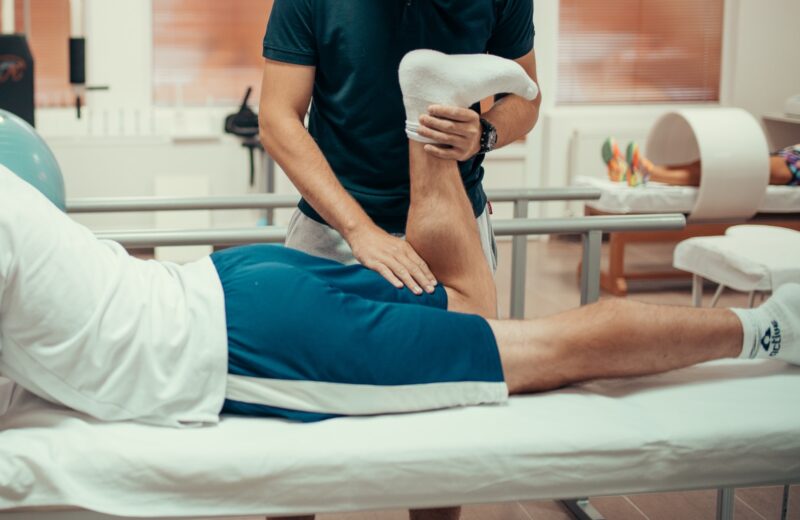
The morning-stair pain. Plantar fasciitis is a silent epidemic in our patient list — we treat it with structured calf and foot loading, dry needling for trigger points, and taping for symptom relief.
That sharp, stabbing heel pain on your first steps out of bed is the signature of plantar fasciitis — a load-related irritation of the tissue along the sole of the foot. It is a silent epidemic among our patients, and it rarely responds to rest alone because the underlying problem is capacity, not damage.
We treat it with structured calf and foot loading to build the tissue’s tolerance, dry needling to settle stubborn trigger points, and taping for short-term relief while the bigger work takes hold. Footwear and load advice round it out so the pain does not creep back.
Image — calf and foot loading for the plantar fascia
Why it happens
The root causes we look for.
01
Calf & foot weakness
Insufficient strength through the calf and foot overloads the plantar fascia.
02
Sudden load change
A jump in walking, running or standing outpaces what the tissue can tolerate.
03
Footwear
Unsupportive or worn-out shoes shift load onto the heel and arch.
04
Tight calves
Limited ankle range increases the strain travelling through the fascia with each step.
Symptoms we treat
Recognise any of these?
Sharp heel pain on first steps in the morning
Pain after prolonged standing
Pain at the end of the day
Tightness in the calf
Discomfort on walking barefoot
Worse on hard surfaces
Our Approach
How we'll actually treat it.
WEEK 1
1
Settle the tissue
Manual therapy, dry needling for trigger points, taping for short-term relief.
WEEK 2–4
2
Calf loading
High-load calf strengthening — the most evidence-backed intervention for plantar fasciitis.
WEEK 4–7
3
Foot intrinsics
Strengthen the small muscles of the foot, address footwear and arch support.
WEEK 7–10
4
Return to running
Graded return to high-impact activity, prevention strategies.
Services Involved
The disciplines we'll combine.
Every programme braids two or three of our core services. Here's the typical pairing for this condition.
Trigger-point needling to deactivate hypertonic bands.
T
Kinesiology Taping
Proprioceptive support during return-to-sport.
The results
Treatment that actually holds.
Plantar fasciitis tests your patience, but it does resolve — with a proper loading programme the great majority of patients get back to pain-free first steps and full activity.
88%
Recovery & satisfaction rate
6–10 wk
Typical programme to resolution
6–10 weeks
Typical programme
45 min
Per session
Common questions
Your questions, answered.
Still unsure? Our clinicians answer the questions patients ask most. You can always call the HSR Layout clinic for a straight answer first.
Overnight the fascia tightens, and your first steps suddenly load it, producing that sharp heel pain. It usually eases as you warm up. The pattern is so typical it helps confirm the diagnosis.
Rest may ease it temporarily, but the pain returns the moment you load the foot again, because rest does not build the tissue's capacity. Structured loading is what produces lasting recovery — it is counter-intuitive but well supported.
Sometimes insoles help in the short term by offloading the heel, but they are rarely the whole answer. We focus on building foot and calf strength so you are not dependent on them long term.
It can be very effective for the trigger points in the calf and foot that feed the pain, often giving quicker relief alongside the loading programme. It is optional and well tolerated.
With a consistent loading programme, most cases improve over 6–10 weeks. Long-standing cases can take longer, but they still respond — the key is sticking with the progressive loading rather than chasing passive fixes.
Stretching can offer some short-term relief, but on its own it rarely resolves plantar fasciitis — the calf and foot need to be strengthened under load, not just lengthened. We typically include both, weighted towards the strengthening that does the lasting work.
Usually yes, with high-impact work like running or jumping reduced or swapped temporarily. Strength training for the rest of the body, and even some loaded calf work, often continues right through treatment.
Not quite — a heel spur is a bony growth that shows up on X-ray, and many people have one without any pain at all. Plantar fasciitis is the painful condition itself, and treating the fascia, not the spur, is what resolves the symptoms.