S
Sevens Physiotherapy
Physiotherapy · Movement · Rehab
Home/Conditions/Knee Replacement Rehab
Rehab · Treatment

Knee Replacement Rehab

Post-Total Knee Replacement rehabilitation from week 1 through to discharge. Patient, methodical, milestone-driven — we know exactly what should happen and when.

Typical programme
12–24 weeks
Session length
60 min
Recovery rate
96%
Understanding the condition

Total knee replacement rehabilitation — what a good recovery actually looks like.

A total knee replacement is a superb operation — but the result you get depends heavily on the rehabilitation that follows. The first weeks set your ceiling: range of motion won early is range you keep. Stiffness allowed to settle in early is hard to win back.

We run post-TKR rehab from week one through to discharge, knowing exactly what should happen and when. Early focus is range and reactivating the quad; later phases rebuild strength, balance and walking quality so you get back to the stairs, the garden and the life the surgery was meant to restore.

Knee Replacement Rehab
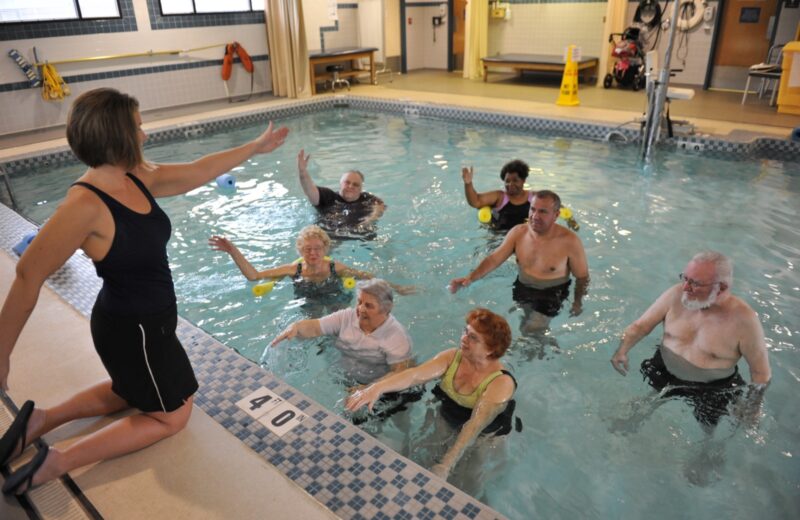
Image — early range and gait retraining post-TKR
Why it happens

The root causes we look for.

01
End-stage knee osteoarthritis
The most common indication for TKR: loss of articular cartilage to the point where bone contacts bone, producing severe pain with minimal activity and progressive deformity.
02
Post-traumatic arthritis
Significant knee injuries (ACL, meniscal, patellar fractures) can accelerate cartilage wear and produce arthritic change decades earlier than typical — sometimes indicating TKR in patients in their forties or early fifties.
03
Rheumatoid arthritis joint destruction
In severe RA, autoimmune inflammation destroys joint cartilage and bone over time, sometimes requiring TKR at a younger age than osteoarthritis typically would.
Symptoms we treat

Recognise any of these?

Recent TKR surgery
Severe stiffness post-op
Difficulty bending the knee
Weakness on standing from a chair
Swelling around the joint
Difficulty walking distances
Our Approach

How we'll actually treat it.

WEEK 1–4
1
Range first
Restore knee extension and flexion. Pain and swelling management.
WEEK 4–10
2
Walking & basic strength
Independent walking, stair climbing, glute and quad strengthening.
WEEK 10–18
3
Functional load
Squats, step-ups, balance training, return to daily activities.
WEEK 18+
4
Lifestyle return
Cycling, swimming, golf, gentle hiking — the activities patients ask for.
The results

Treatment that actually holds.

96% of our TKR patients achieve their functional rehabilitation goals. By three months, most are walking without aids and managing stairs independently. By six months, the large majority are fully active in their daily lives.

96%
Recovery & satisfaction rate
96%
Reach discharge goals
12–24 weeks
Typical programme
60 min
Per session
Common questions

Your questions, answered.

Still unsure? Our clinicians answer the questions patients ask most. You can always call the HSR Layout clinic for a straight answer first.

Ask us directly

Ideally the day after surgery, or even on the day of surgery for ambulatory patients. Early range of movement and quadriceps activation in the first 48–72 hours has a measurable impact on long-term range of motion and strength outcomes. If you have been discharged without a physiotherapy referral, get one immediately.
Some stiffness is expected, but significant extension deficit or less than 90 degrees of flexion at six weeks warrants attention. We intensify range work and manual therapy at this stage; if there is a genuine arthrofibrosis risk, early intervention avoids a more involved procedure later.
Most patients regain normal stair function — step-over-step, both directions — within eight to twelve weeks with structured physiotherapy. Rebuilding the eccentric quadriceps strength for descent is the longer task.
We give you a specific daily walking target at each phase of recovery. Frequent short walks (10–15 minutes multiple times per day) in the first two weeks are more beneficial than one long walk. Volume increases progressively as swelling settles and strength builds.
Ready to start?

Let's get this handled.

Book a 60-minute assessment with one of our clinicians. You'll leave with a clear diagnosis, a written programme, and a realistic timeline.

Book assessment
What's included:
  • → Full movement assessment
  • → Diagnosis & root-cause analysis
  • → Written programme with milestones
  • → Cost & timeline upfront
  • → Same-day hands-on treatment if appropriate