S
Sevens Physiotherapy
Physiotherapy · Movement · Rehab
Home/Conditions/Knee Pain
Lower Body · Treatment

Knee Pain

Patellofemoral pain, jumper's knee, runner's knee, IT-band friction — knees are our most-treated joint. Milestone-based programmes with weekly re-testing.

Typical programme
8–14 weeks
Session length
60 min
Recovery rate
93%
Understanding the condition

Knee pain that stops you running, climbing stairs or sitting comfortably — what's driving it?

Patellofemoral pain, jumper’s knee, runner’s knee and IT-band friction make the knee our most-treated joint. The knee usually hurts because of what is happening above and below it — the hip, the quad, the foot and the way you absorb load. The knee is just where the bill arrives.

We diagnose the specific pattern, settle the irritated tissue, and then load it deliberately — because tendons and joint surfaces get stronger only through the right kind of stress. Every programme is milestone-based with weekly re-testing, so progress is measured, not guessed.

Knee Pain
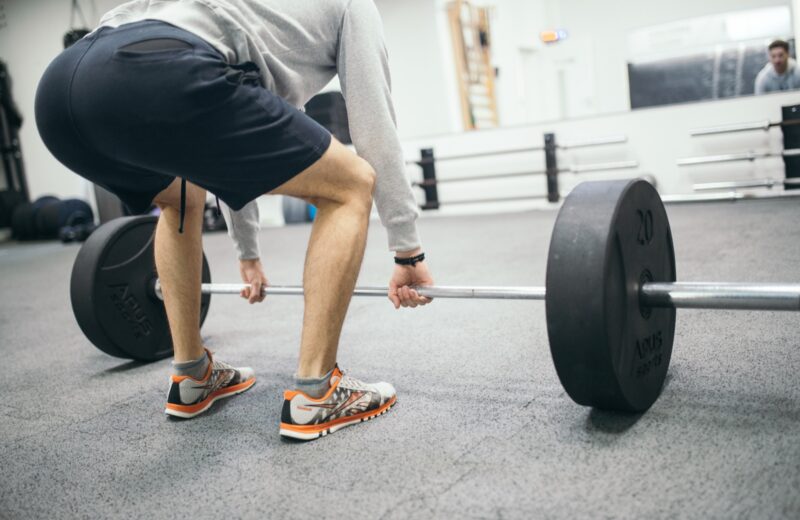
Image — knee loading and movement screen
Why it happens

The root causes we look for.

01
Patellofemoral pain syndrome
Abnormal patellar tracking creates pain behind and around the kneecap during stairs, squatting, running and prolonged sitting. Almost always driven by VMO weakness and hip external rotation deficit.
02
Patellar or quadriceps tendinopathy
Degenerative tendon change from repetitive jumping, running or loading. Produces a sharp localised pain at the tendon attachment point that worsens with activity and stiffens after rest.
03
Iliotibial band friction
The IT band rubs against the lateral femoral condyle during repetitive knee flexion-extension in runners. Produces sharp lateral knee pain that appears consistently at a specific distance or pace.
04
Hip abductor weakness
Insufficient hip abductor and external rotator strength allows dynamic knee valgus during single-leg activities, substantially increasing patellofemoral joint stress.
05
Flat foot biomechanics
Excessive foot pronation internally rotates the tibia and increases Q-angle, altering patellar tracking and loading the medial structures of the knee asymmetrically.
Symptoms we treat

Recognise any of these?

Pain going down stairs
Aching after sitting for long periods
Pain after running or cycling
Swelling that comes and goes
Clicking or catching
Feeling of giving way
Our Approach

How we'll actually treat it.

WEEK 1
1
Find the source
Patellofemoral, meniscal, tendon, or referred? Specific tests, specific answer.
WEEK 2–5
2
Load tolerance
Pain-modulated loading, manual therapy, taping for short-term relief.
WEEK 5–10
3
Strength build
Quadriceps, glute and calf strengthening at progressive load.
WEEK 10–14
4
Return to activity
Running mechanics, jumping protocols, sport-specific drills.
Services Involved

The disciplines we'll combine.

Every programme braids two or three of our core services. Here's the typical pairing for this condition.

The results

Treatment that actually holds.

93% of patellofemoral and tendinopathy presentations in our clinic discharge at goal. Most running-related knee pain resolves in six to ten weeks with the right loading strategy. We track with objective strength tests, not symptom diaries.

93%
Recovery & satisfaction rate
93%
Return to running & sport
8–14 weeks
Typical programme
60 min
Per session
Common questions

Your questions, answered.

Still unsure? Our clinicians answer the questions patients ask most. You can always call the HSR Layout clinic for a straight answer first.

Ask us directly
Not necessarily — reducing volume and intensity while continuing structured loading is usually better than complete rest. We'll give you specific guidance on what running volume is appropriate at each stage, based on your symptoms and strength tests.
Descending stairs places approximately 3–4 times body weight through the patellofemoral joint. If the quadriceps are weak or the patella is tracking incorrectly, this loading creates the characteristic pain on the descent — a reliable indicator of patellofemoral involvement.
This is the classic pattern of a load-management problem combined with a biomechanical driver. The tissue recovers with rest because the provocative load is removed, but the underlying issue — poor hip control, tracking deficit, tendon weakness — is still there and reloads immediately when you run.
Runner's knee is a colloquial term used for both patellofemoral pain syndrome and IT band syndrome — two different conditions that need different treatment. We distinguish them in your first session.
Ready to start?

Let's get this handled.

Book a 60-minute assessment with one of our clinicians. You'll leave with a clear diagnosis, a written programme, and a realistic timeline.

Book assessment
What's included:
  • → Full movement assessment
  • → Diagnosis & root-cause analysis
  • → Written programme with milestones
  • → Cost & timeline upfront
  • → Same-day hands-on treatment if appropriate