An ACL rupture is one of the most disruptive injuries a physically active person can experience. The initial injury is sharp and definitive. The recovery that follows is long, non-linear, and frequently underestimated.
Full ACL recovery takes 9 to 12 months, not the 6 months often quoted — the graft needs time to “ligamentise,” not just heal on a scan. Progression should be based on strength and movement testing, not the calendar: returning to running or sport before hitting objective criteria significantly raises reinjury risk.
Most people are told ACL reconstruction surgery takes six to nine months to recover from. What they’re rarely told is what those months actually involve, why the timeline can’t be compressed without increasing reinjury risk, and what the rehabilitation programme needs to accomplish at each stage for the return to sport to be safe and lasting.
The quality of your physiotherapy programme has a larger impact on your outcome than almost any other factor outside of the surgery itself. Athletes who complete structured, progressive ACL rehabilitation return to sport at higher rates, re-rupture at lower rates, and maintain better long-term knee function than those guided by time alone.
The First Two Weeks: Managing the Surgery
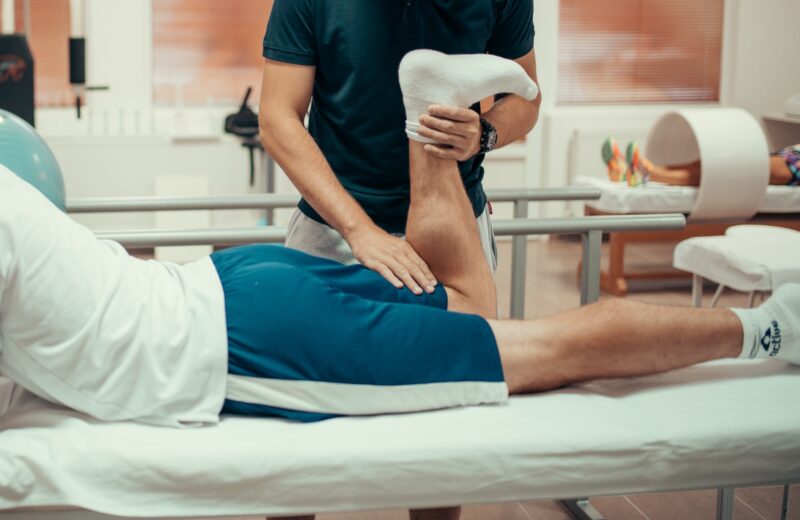
The immediate post-operative period is about managing swelling and pain, protecting the graft, and restoring basic function — pictured above. Controlling swelling is the priority — significant swelling inhibits quadriceps activation, a phenomenon called arthrogenic muscle inhibition, where the nervous system suppresses the quadriceps to protect the swollen joint.
In the first two weeks, your physiotherapist guides you through gentle range of motion work to recover knee extension, ice and compression management, and gentle quadriceps activation exercises such as quad sets and straight leg raises. Full extension is critical and should be prioritised even over flexion, since a flexion contracture is far harder to correct later.
Weeks Two to Six: Restoring Range and Beginning Load
By week two to three, assuming swelling is reducing appropriately, physiotherapy shifts toward recovering full range of motion and beginning progressive loading of the quadriceps and hamstrings.
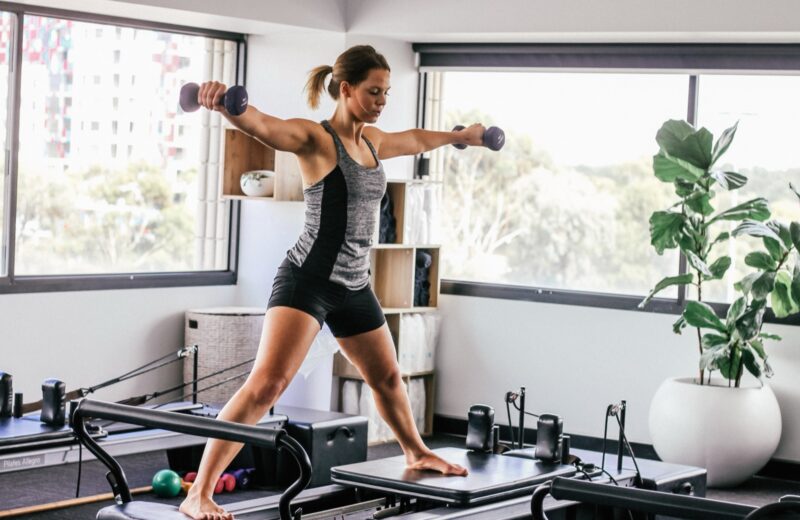
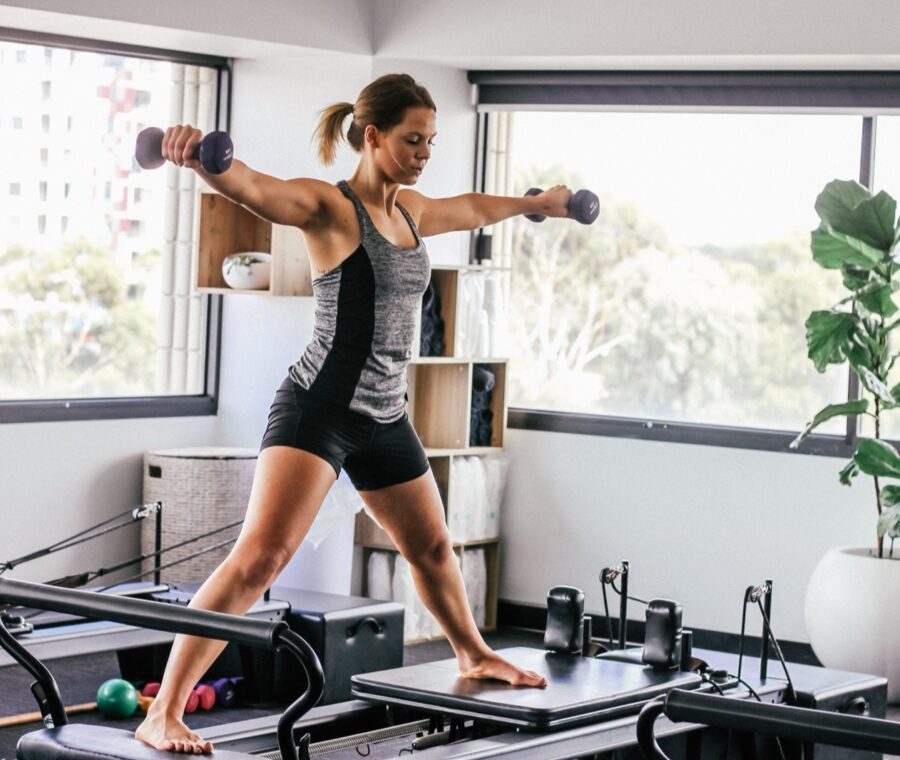
Closed-chain exercises — movements where the foot is in contact with the ground, such as mini squats, step-ups, and leg press on a reformer — are preferred in this phase because they load the graft at a controllable, adjustable tension, lower than open-chain exercises, while building functional muscle strength. It’s part of why clinical pilates is built into most ACL programmes.
Swelling monitoring remains essential — any exercise that produces significantly increased swelling the following day needs to be modified. Swelling isn’t a sign of effort; it’s a sign of too much load too soon. By week four to six, most patients have recovered close to full range of motion, good quadriceps control at low loads, and are beginning hip and calf strength work, which is critical to knee stability but often undertrained.
Weeks Six to Twelve: Building Strength
This phase is where the real rehabilitation work happens — and it’s also the phase most commonly rushed or cut short.
The graft undergoes “ligamentisation,” a process considerably slower than the tissue healing visible on imaging. A knee that looks healed on an MRI is not necessarily ready for sport.
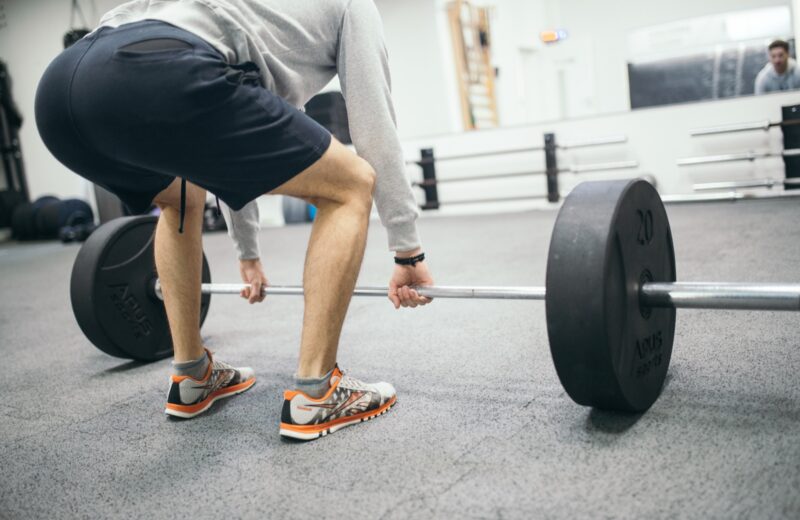
During weeks six to twelve, the programme expands to more demanding strength exercises: leg press progressions, Romanian deadlifts, hip strengthening, and the beginning of low-level plyometrics such as controlled bilateral jumps.
Months Three to Six: Running, Agility, and Functional Work
Most patients begin a return-to-running programme around three months, provided strength criteria are met — a graduated process starting with slow jogging on flat ground and progressing over several weeks to faster running, change of direction, and sport-specific agility work.
Your physiotherapist should be measuring your running mechanics, looking for compensatory patterns that place additional load on the reconstructed knee, and adjusting the programme accordingly. By month four to five, the programme incorporates more complex agility drills, lateral movements, and the beginning of sport-specific conditioning. Strength work continues throughout and shouldn’t be reduced as running load increases.
Months Six to Nine: Return to Sport Testing
Before returning to full competitive sport, a well-designed rehabilitation programme includes objective return-to-sport testing: strength testing to confirm limb symmetry at ninety percent or above, hop tests comparing distance and landing mechanics between both legs, and movement quality assessments under fatigue.
Psychological readiness matters too. Fear of reinjury is common and legitimate after ACL surgery, and athletes who return before they feel psychologically ready have higher reinjury rates regardless of their physical outcomes. At Sevens Physiotherapy in HSR Layout, ACL rehabilitation programmes are built around this objective, criteria-based framework rather than fixed timelines — designed in coordination with your surgical team and progressed based on what your knee demonstrates, not what the calendar says. The same framework applies to most sports injuries we see, not just ACL cases.