Aquatic Physiotherapy
Structured, clinically-directed rehabilitation in a heated therapeutic pool — using water's buoyancy, resistance and warmth to enable movement that is impossible, or too painful, on dry land.
A starting point land-based rehab can't offer.
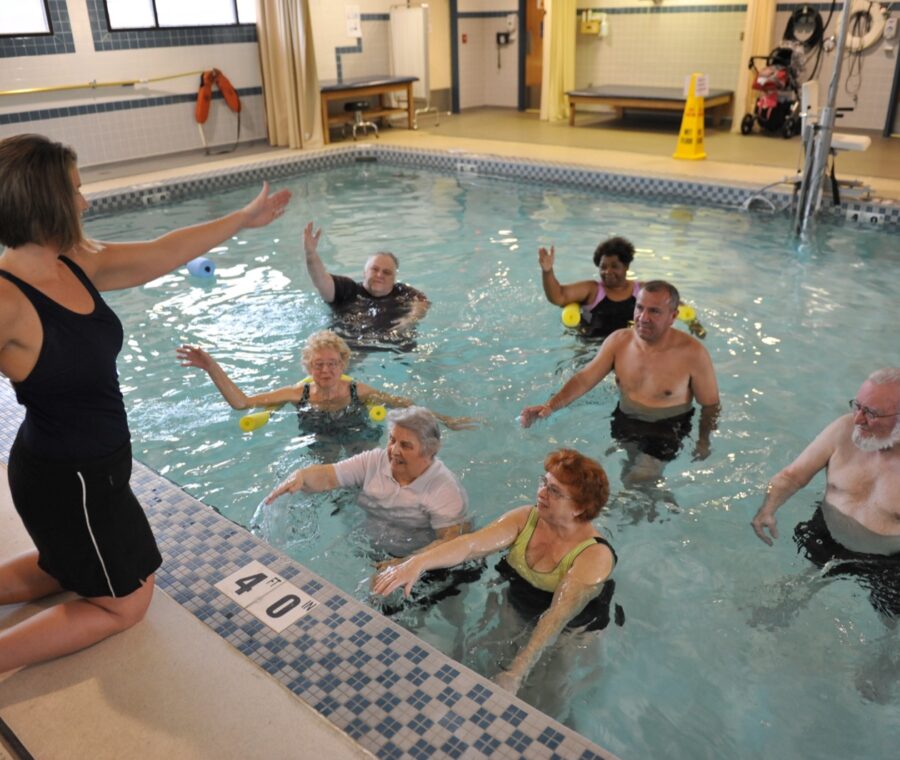
Some patients simply cannot begin rehabilitation on dry land — someone who has just had a total knee replacement and cannot bear full weight through the operated leg, a person with severe osteoarthritis whose joint pain stops them moving before the exercise can even begin, an older adult whose balance is too compromised to exercise safely on a stable surface. For these patients, aquatic physiotherapy provides a starting point land-based rehabilitation cannot. Buoyancy reduces the effective load through a joint to roughly a fifth of normal when immersed to chest depth — often the difference between being able to begin rehabilitation or not.
Water’s resistance is naturally self-regulating: push harder and it pushes back harder, move slowly and the resistance stays minimal, which makes pool exercise genuinely therapeutic rather than passive. The warmth of a heated pool, kept between 33 and 36°C for clinical work, relaxes muscle spasm and increases tissue extensibility before movement even begins — many patients with chronic pain notice a meaningful reduction within the first few minutes of immersion.
Used deliberately by a trained physiotherapist, these properties make aquatic physiotherapy one of the most effective tools available for early-stage post-surgical rehab, painful degenerative conditions, and populations where land-based exercise carries real risk. It’s typically a bridge, not a permanent mode of rehabilitation — as strength and tolerance build, the programme transitions toward land-based work that more closely replicates daily life and sport.
What this service actually involves.
Your journey, step by step.
Conditions this helps.
This service rarely works in isolation — here's where it does the heavy lifting. Tap any condition to see the full treatment plan.
Care that holds up.
Aquatic physiotherapy works because it removes the barrier — pain, load, fall risk — that stops rehabilitation from starting at all, then hands you off to land-based work once you're strong enough to use it.
Your questions, answered.
Want to know if this service is right for you? Call the HSR Layout clinic or book an assessment — we'll give you a straight answer.
Ask us directly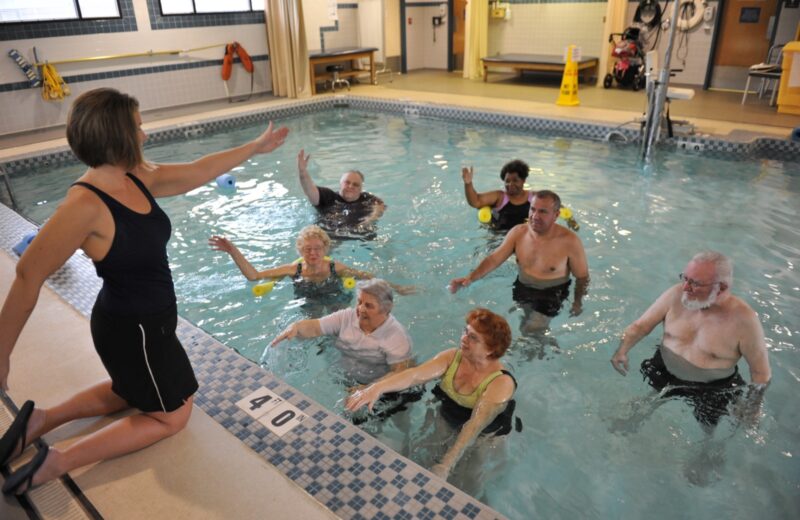
Let's build your plan.
Book a 60-minute assessment. You'll leave with a clear diagnosis, a written programme, and an honest timeline — no upselling, no padding.
Book assessment- → Full movement assessment
- → Diagnosis & root-cause analysis
- → Written programme with milestones
- → Cost & timeline upfront
- → Same-day hands-on treatment if appropriate