Knee replacement surgery is one of the most commonly performed orthopaedic procedures in India, and for good reason. When knee arthritis reaches the point where it’s genuinely limiting daily life, a well-executed total or partial knee replacement can restore function and eliminate pain in a way no other intervention can match.
The implant is only half the outcome. Structured rehabilitation over three to six months — quadriceps strengthening, range-of-motion work, and progressive loading — is what determines whether you walk without a limp and climb stairs normally again. Skipping it is the most common reason patients plateau below what the new joint can actually support.
What’s less well understood is the role of rehabilitation in determining whether that surgical outcome is as good as it can be. The strength, mobility, and movement patterns you develop in the months following surgery have a profound effect on how the knee functions at one, five, and ten years post-operation.
This guide explains what post knee replacement rehab in Bangalore should look like, what happens at each stage, and how to identify whether the programme you’re receiving is adequate for the demands of the recovery.
Why Rehabilitation Is Non-Negotiable After Knee Replacement
Knee replacement surgery involves removing the damaged cartilage and bone surfaces of the joint and replacing them with metal and polyethylene components. The surgical process is well established and outcomes from the procedure itself are generally excellent.
However, the surgery doesn’t repair the muscles around the knee. By the time most patients reach surgery, the quadriceps and hamstrings have been significantly atrophied from months or years of protecting the painful joint — and the nervous system has altered how it recruits muscles around the knee to minimise pain, so even muscles that are present aren’t being used efficiently.
Without structured rehabilitation, many patients plateau at a level of function significantly below what the implant is capable of supporting. They walk with a limp, can’t climb stairs reciprocally, struggle getting up from a chair, and never recover full confidence in the knee. Structured physiotherapy changes this outcome — patients who complete a supervised, progressive programme achieve better range of motion, higher functional scores, greater strength symmetry, and higher satisfaction with their surgical outcome.
The First Six Weeks: Foundation Building
The early post-operative phase is concerned with managing swelling and pain, preventing complications such as joint stiffness and blood clots, and beginning muscle reactivation.
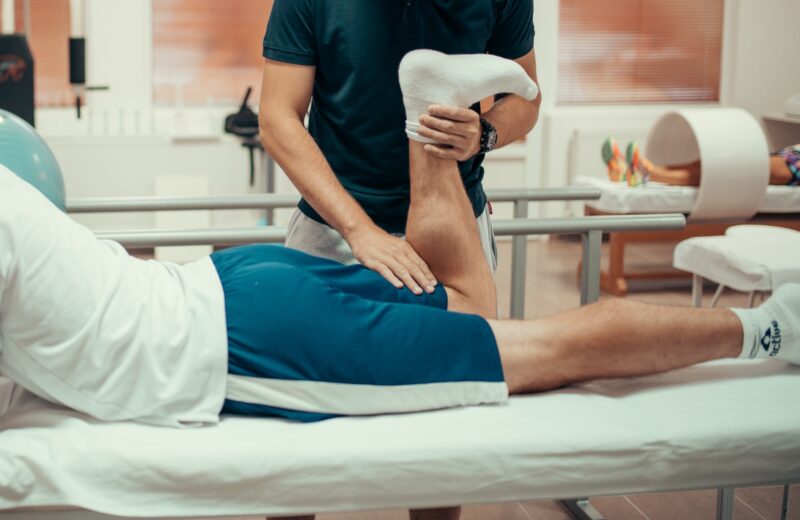
In the hospital and the days immediately after discharge, your physiotherapist guides you through gentle ankle pump exercises to maintain circulation, basic quadriceps activation, straight leg raises, and the beginning of knee flexion and extension work. The target in the first week is typically ninety degrees of knee flexion — achieving this early matters because scar tissue forming around the joint becomes increasingly difficult to mobilise if range of motion isn’t actively pursued from the outset.
Between weeks two and six, the programme expands to weight-bearing exercises such as mini squats, step-ups, and static bike work. Swelling and pain remain the guide to appropriate loading — if the knee is significantly more swollen the day after a session, the load was too high. Most patients are off crutches by four to six weeks, though this depends on the surgical approach and individual recovery rate.
Six Weeks to Three Months: Rebuilding Strength
By six weeks post-operation, the knee is sufficiently healed for more progressive strengthening work to begin. This is the phase that determines the long-term functional outcome more than any other.
Quadriceps weakness at three months post-surgery is one of the strongest predictors of poor long-term outcomes — the quadriceps control the knee during walking, stair climbing, and getting up from a chair.
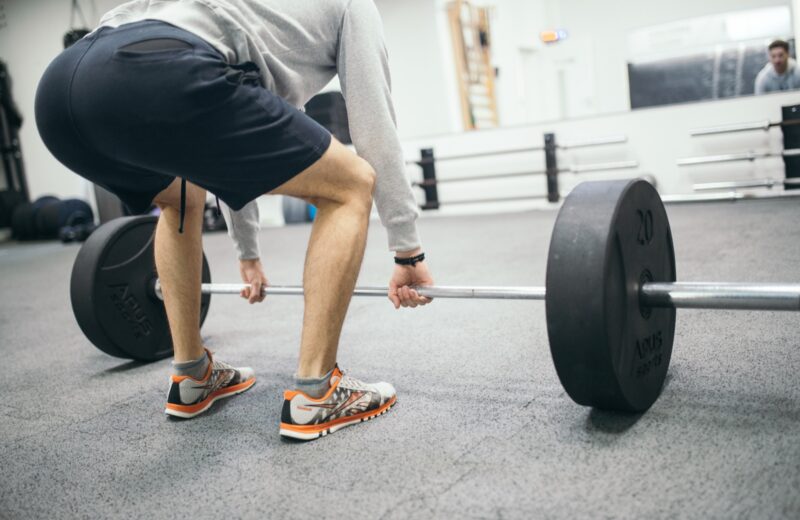
Leg press progressions, Romanian deadlifts, terminal knee extensions, and hip strengthening exercises all form part of the programme at this stage. Clinical pilates is highly effective in this phase because the reformer allows progressive quadriceps and hip loading in a controlled, low-impact environment — much safer than conventional gym equipment for someone in the early post-surgical period, as pictured above.
Balance and proprioception training also intensifies. The knee has a significant population of nerve receptors that provide information to the nervous system about joint position and load — these are disrupted by surgery and need retraining through progressive balance challenges.
Three to Six Months: Return to Full Function
By three months, most patients have achieved the majority of their range of motion and are approaching adequate quadriceps strength for normal daily activities. The focus shifts from baseline function to the full range of activities that matter to the individual patient.
For an older adult, this might mean walking confidently for an hour, climbing stairs without holding the rail, and getting in and out of a car comfortably. For an active person in their fifties, it might mean returning to recreational sport or a regular gym programme.
At Sevens Physiotherapy in HSR Layout, knee replacement rehabilitation programmes are typically structured over twelve weeks of regular physiotherapy, with a further three to six months of home programme maintenance. Most patients see their physiotherapist weekly or twice weekly in the early stages, with sessions spacing out as strength and function improve — the same structured approach we use for patients recovering from knee osteoarthritis more broadly, surgical or not.
What Good Knee Replacement Rehabilitation Looks Like in Practice
A well-structured programme includes several elements sometimes absent from shorter or less supervised ones.
Regular objective assessment. A physiotherapist should be measuring your range of motion, muscle strength, and walking pattern at regular intervals and adjusting the programme based on what those measurements show. A programme that never measures outcomes can’t identify when something isn’t progressing as expected.
Progressive loading. The exercises should get harder over time. A programme that keeps you doing the same exercises at the same intensity isn’t a rehabilitation programme — it’s maintenance.
Education about what’s normal. Swelling, warmth, and fatigue in the early post-operative period are expected. Knowing what’s a normal part of recovery and what requires attention reduces anxiety and helps you make better decisions about activity levels.
Clear goals and milestones. A good programme isn’t open-ended — there should be agreed milestones, such as recovering ninety degrees of flexion by week two or eighty percent quadriceps symmetry by week twelve, and a clear path toward discharge.