Knee osteoarthritis is one of the most common musculoskeletal conditions in India — and one of the most misunderstood. The typical response to hearing that the cartilage in your knee is wearing down is to move less, protect the joint, and wait to see how far it progresses before considering surgery. That response, however understandable, is almost exactly wrong. Knee osteoarthritis is a condition that responds to exercise — not reckless exercise, but structured, progressive, physiotherapy-guided loading that strengthens the muscles supporting the joint and maintains the range of motion the condition would otherwise erode.
Rest doesn’t protect an arthritic knee — it accelerates the muscle weakness and poor cartilage nutrition that make the condition worse. Structured, progressive exercise is first-line treatment, and a physiotherapy-guided programme of eight to twelve weeks produces meaningful improvement in most patients. Surgery is a last resort, not a first one.
This guide covers what’s actually happening inside an arthritic knee, why rest makes it worse rather than better, what a proper physiotherapy programme looks like, and when surgery genuinely is the right call.
What Knee Osteoarthritis Actually Is
Osteoarthritis is a degenerative joint disease marked by the breakdown of articular cartilage — the smooth tissue lining the joint that lets the bones glide against each other with low friction. As cartilage degenerates it gets thinner and rougher; in more advanced cases the underlying bone becomes exposed, reactive bone changes form at the joint margins, and the joint space narrows. It’s most common in people over fifty, in women, in those who are overweight, and in anyone with a history of joint injury or high-impact occupational loading. The medial compartment — the inside of the knee — is the most commonly affected site.
Symptoms vary considerably between people and don’t correlate reliably with how severe the joint looks on an X-ray. Some patients with major structural changes on imaging have mild symptoms; others with modest changes have significant pain and limitation. That disconnect matters clinically, because it means imaging findings alone shouldn’t drive treatment decisions. Pain is typically activity-related — worse with stairs, prolonged walking, and getting up from sitting — and often comes with stiffness after rest that usually eases within thirty minutes, unlike the more prolonged morning stiffness seen in inflammatory conditions like rheumatoid arthritis.
Why Rest Makes It Worse, Not Better
Cartilage has no blood supply of its own — it gets its nutrition from synovial fluid, and that fluid distribution depends on the joint actually moving and loading. Rest a joint for long enough and cartilage nutrition suffers along with it.
Muscle weakness is the other half of the problem. The quadriceps and hamstrings are the knee’s primary dynamic stabilisers, distributing load across the joint and taking stress off cartilage and ligaments. In osteoarthritis, quadriceps weakness is close to universal — pain, reflex inhibition of the muscle around a painful joint, and simple reduced activity all push it in the same direction. That weakness increases load on already-compromised cartilage, which accelerates the mechanical wear it’s supposed to protect against. Every extra week of inactivity is a week the muscles that could be protecting the joint are getting less capable of doing so — appropriately dosed movement is the treatment precisely because it reverses all of this at once: better cartilage nutrition, stronger quadriceps, less reflex inhibition, maintained range of motion, and reduced pain through the nervous system’s own mechanisms.

What Physiotherapy for Knee Osteoarthritis Looks Like
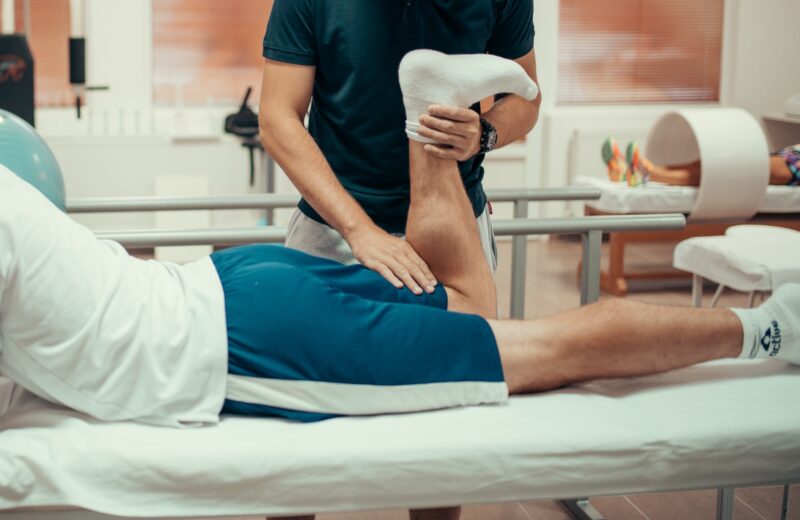
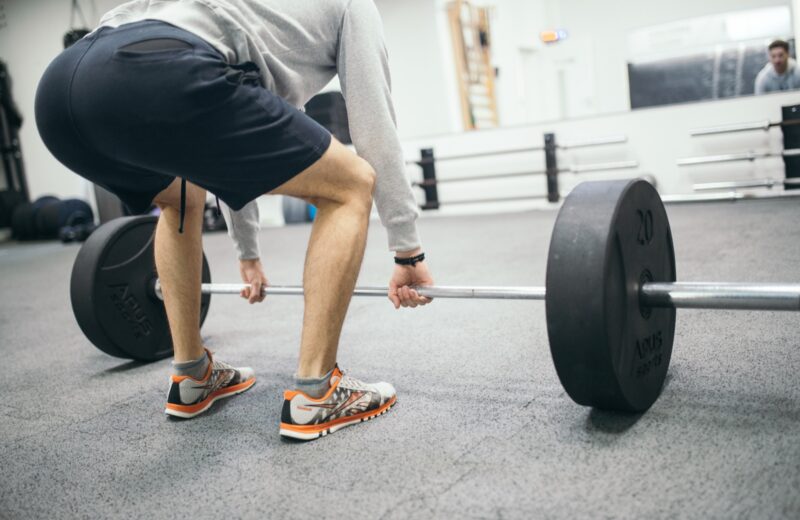
Physiotherapy for knee osteoarthritis at Sevens in HSR Layout starts with a full assessment: how limited function actually is, which specific muscles are underperforming, how much range of motion is available, and what the patient actually wants to get back to. The programme is built around progressive exercise — starting at a load you can manage with acceptable discomfort and building from there as strength and tolerance improve. The work is specific: quadriceps strengthening, hip abductor and extensor work to manage pelvic stability and reduce load through the inside of the knee, calf strengthening, and a gradual progression through squats, step work, and walking tolerance.
Some pain during exercise is expected and doesn’t mean harm is occurring. The usual guideline is that exercise pain should stay at four or five out of ten and settle back to baseline within twenty-four hours — inside that window, it’s safe and it’s working.
Manual therapy addressing joint stiffness and the soft tissue restriction that builds up around an arthritic knee complements the exercise programme — improving patellar mobility, restoring joint play, and releasing the muscle guarding that develops as a protective response can meaningfully improve both range of motion and pain. Clinical pilates on the reformer is particularly useful here: it allows lower-limb strengthening in supported positions that reduce joint load while still delivering the progressive resistance quadriceps need to rebuild. Patients who’d find standing exercise too painful early on can still do high-quality muscle work lying or seated on the reformer, building the base for more loaded work as capacity improves — the same principle used in knee replacement rehab, just applied before surgery becomes the conversation rather than after it.
Weight and the Knee
The relationship between body weight and knee osteoarthritis symptoms is one of the clearest in musculoskeletal medicine — a modest five to ten percent reduction in body weight produces clinically meaningful drops in knee pain and functional limitation. Physiotherapy and exercise are the physical-activity half of any weight management plan; the diet side needs its own intervention, but a physiotherapist can help build the movement patterns that make sustainable activity possible in the first place.
When Surgery Is — and Isn’t — the Answer
Knee replacement is genuinely effective for end-stage osteoarthritis where conservative management hasn’t controlled pain or restored function. It’s not a first resort — most people with knee osteoarthritis do well with structured physiotherapy and lifestyle change alone. The evidence for arthroscopic surgery in osteoarthritis specifically — procedures like joint washout or loose body removal — is weak; several large trials show outcomes no better than physiotherapy alone for the most common arthroscopic procedures. The exception is a genuine mechanical problem, like a knee locked by a loose body, where surgery is clearly indicated. A physiotherapy assessment can tell you honestly whether conservative management is likely to work for your knee, and refers you to an orthopaedic surgeon if and when that assessment says surgery is the right next step.
Frequently Asked Questions
Book a Knee Osteoarthritis Assessment at Sevens Physiotherapy
Knee osteoarthritis is manageable. It doesn’t have to mean progressively less activity, chronic pain, and eventual surgery. A structured programme tailored to your level of function, symptom severity, and goals can make a genuine difference — the same approach we use for knee pain more broadly, matched specifically to what’s actually happening in your joint.
Book at hello@sevensphysiotherapy.com or call +91 99009 01958.