S
Sevens Physiotherapy
Physiotherapy · Movement · Rehab
Home/Conditions/Neurological Physiotherapy
Rehab · Treatment

Neurological Physiotherapy

Specialist rehabilitation for stroke, Parkinson's disease, multiple sclerosis and other neurological conditions — targeting the specific weakness, spasticity, balance and gait impairments that follow nervous system damage.

Typical programme
12+ weeks (ongoing)
Session length
45–60 min
Recovery rate
Understanding the condition

Rehabilitation built around neuroplasticity, not just muscle.

When the nervous system is damaged, the consequences for movement and function can be profound. A stroke can leave a person unable to move one side of their body. Parkinson’s disease progressively affects the ability to initiate and coordinate movement, making walking, balance and fine motor tasks increasingly difficult. Multiple sclerosis produces a variable pattern of weakness, fatigue and coordination problems that fluctuates with the disease course. What all of these have in common is that the quality of rehabilitation significantly determines the degree of recovery — the nervous system retains a real capacity for adaptation and reorganisation, called neuroplasticity, throughout life, and physiotherapy is one of the most effective tools for directing it toward functional recovery.

Stroke physiotherapy begins as early as possible after medical stabilisation, typically within 24 to 48 hours — early mobilisation stimulates the neuroplastic changes that drive recovery and prevents the secondary complications of immobility. The affected limb must be actively used and challenged, not compensated for by the unaffected side, to drive the cortical reorganisation that allows recovery. Research shows consistently that more physiotherapy produces more recovery, and that recovery continues well beyond the initial weeks and months.

Parkinson’s disease physiotherapy targets bradykinesia, rigidity, postural instability and freezing of gait using high-amplitude movement training and rhythmic auditory cueing to bypass the defective internal timing mechanism the condition produces. Multiple sclerosis physiotherapy has to respond to a variable disease course — building strength, balance and aerobic fitness during stable periods, and calibrating activity to a fatigue threshold that’s neurological in origin, not simple tiredness.
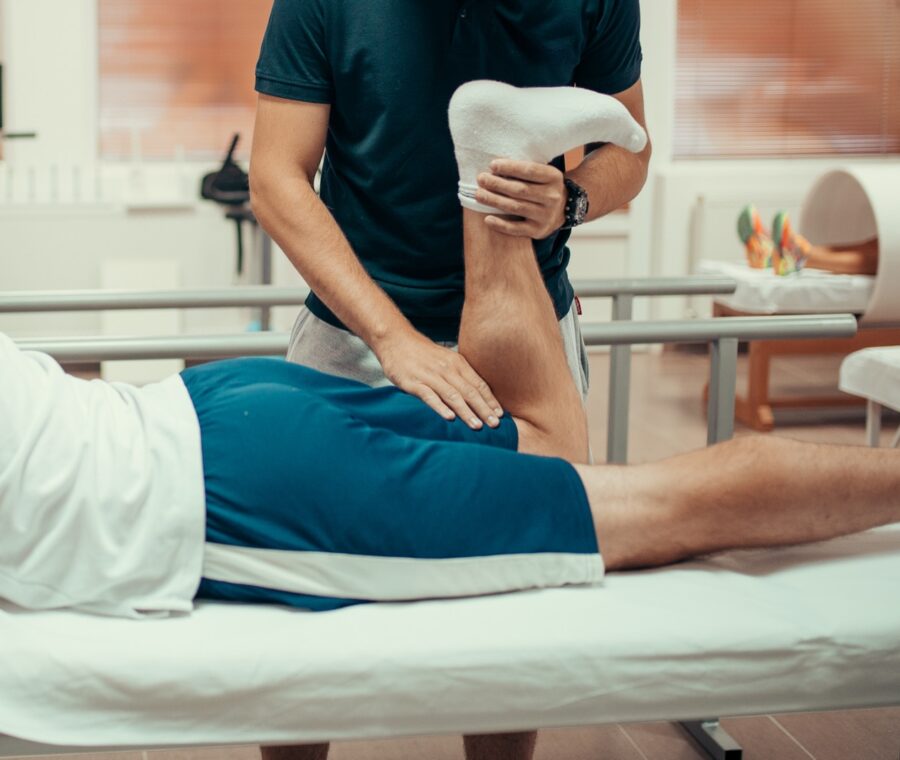
Neurological Physiotherapy
Image — neurological rehabilitation and balance retraining
Why it happens

The root causes we look for.

01
Upper motor neurone damage
Damage to the descending motor pathways produces a distinct pattern of weakness and spasticity that behaves differently from musculoskeletal weakness and needs different treatment.
02
Cerebellar or basal ganglia impairment
Damage to these structures disrupts coordination and the central processing of balance information, rather than just weakening muscles.
03
Disrupted internal movement timing
In Parkinson's disease, the brain's internal cueing for movement initiation becomes unreliable, producing bradykinesia and freezing episodes.
04
Demyelination and conduction fatigue
In MS, nerve signal conduction through demyelinated fibres demands more energy, producing a neurological fatigue that doesn't resolve with simple rest.
Symptoms we treat

Recognise any of these?

Weakness or paralysis on one side after stroke
Slowed, stiff or shuffling movement
Freezing episodes when walking
Balance loss or falls from a neurological cause
Spasticity or abnormal muscle tone
Coordination or fine motor difficulty
Our Approach

How we'll actually treat it.

STEP 1
1
Neurological assessment
Standardised assessment of tone, power, coordination and reflexes alongside functional balance and gait measures.
STEP 2
2
Condition-specific plan
Task-specific training, LSVT BIG or rhythmic cueing for Parkinson's, or fatigue-calibrated work for MS, built around your goals.
STEP 3
3
Progressive rehabilitation
Active, challenging work on the affected side — driving the neuroplastic change that underlies recovery.
ONGOING
4
Adapt & maintain
For progressive conditions, the programme shifts to maintaining function for as long as possible as things change.
Services Involved

The disciplines we'll combine.

Every programme braids two or three of our core services. Here's the typical pairing for this condition.

The results

Treatment that actually holds.

Progress in neurological physiotherapy is often slower and less linear than musculoskeletal rehabilitation — small functional gains represent significant neurological work, and for many conditions that work continues to pay off well beyond the first six months.

12+ mo
Continued gains with sustained rehab
12+ weeks (ongoing)
Typical programme
45–60 min
Per session
Common questions

Your questions, answered.

Still unsure? Our clinicians answer the questions patients ask most. You can always call the HSR Layout clinic for a straight answer first.

Ask us directly

As early as medically appropriate, typically within twenty-four to forty-eight hours of stabilisation. Early mobilisation is strongly supported by evidence and produces better outcomes. Do not wait until discharge from hospital to arrange outpatient physiotherapy: the transition should be seamless.
Physiotherapy does not directly reduce resting tremor, which is managed primarily with medication. It does address all of the other movement impairments of Parkinson's disease, including bradykinesia, rigidity, balance problems, and freezing, which in total have a larger impact on daily function than tremor alone.
Yes. Sevens Physiotherapy provides neurological rehabilitation for stroke, Parkinson's disease, multiple sclerosis, and other neurological conditions. Our physiotherapists have specific training in neurological assessment and treatment.
No. This is a common misconception. Recovery continues as long as rehabilitation continues, and significant functional gains have been demonstrated years after stroke. The rate of recovery is fastest in the first weeks and months, but the potential for improvement with continued therapy exists well beyond six months.
Ready to start?

Let's get this handled.

Book a 60-minute assessment with one of our clinicians. You'll leave with a clear diagnosis, a written programme, and a realistic timeline.

Book assessment
What's included:
  • → Full movement assessment
  • → Diagnosis & root-cause analysis
  • → Written programme with milestones
  • → Cost & timeline upfront
  • → Same-day hands-on treatment if appropriate