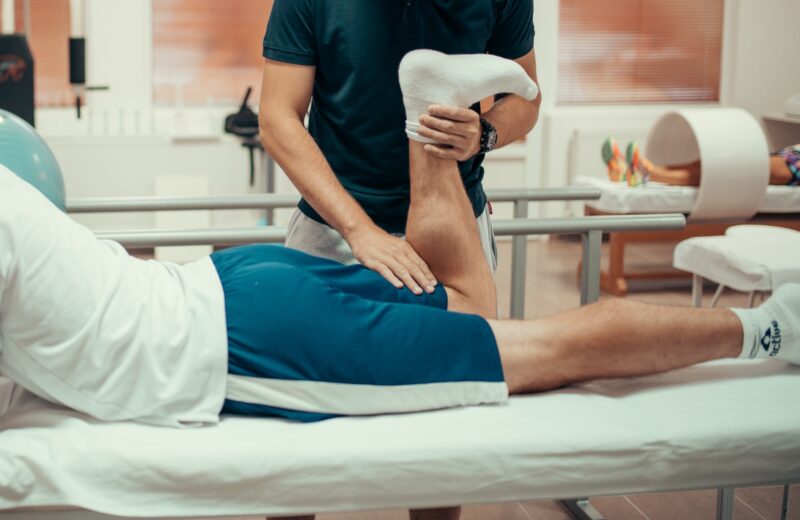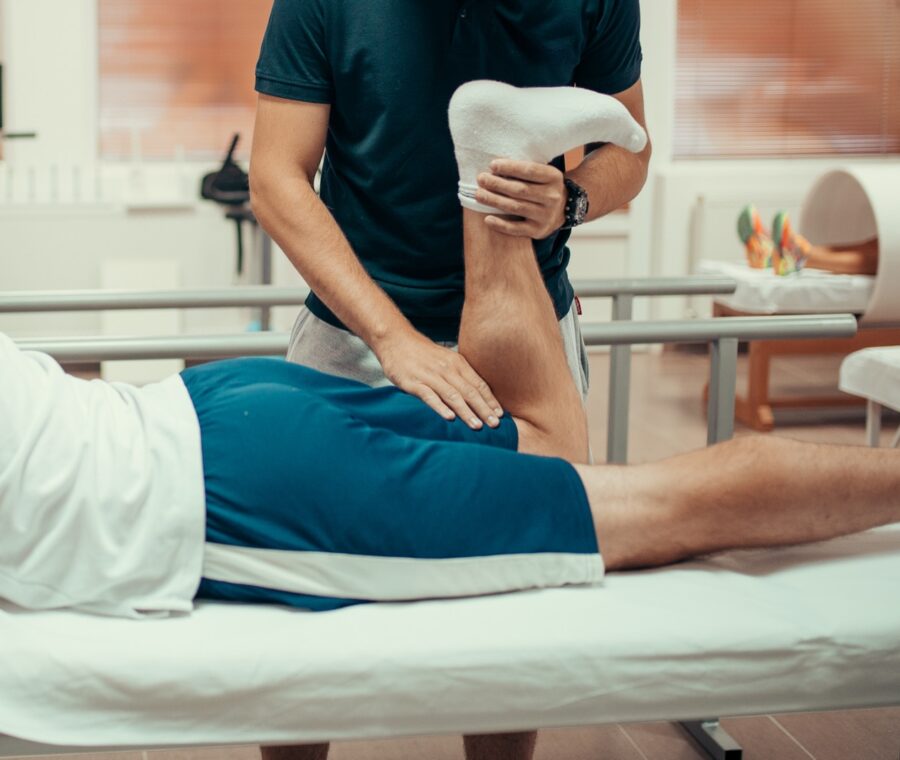
When the nervous system is damaged, the consequences for movement and function can be profound. A stroke can leave a person unable to move one side of their body. Parkinson’s disease progressively affects the ability to initiate and coordinate movement, making walking, balance, and fine motor tasks increasingly difficult. Multiple sclerosis produces a variable pattern of weakness, fatigue, and coordination problems that fluctuates with the disease course.
What stroke, Parkinson’s and MS have in common is that the quality of neurological physiotherapy significantly determines the degree of recovery — the nervous system retains real capacity for adaptation (neuroplasticity) throughout life, and rehab is one of the most effective ways to direct it. Stroke rehab should start within 24-48 hours of stabilisation. Recovery doesn’t stop at six months — it continues for as long as structured rehab continues, often well beyond a year.
What all of these conditions have in common is that the quality of rehabilitation significantly determines the degree of recovery. The nervous system retains a remarkable capacity for adaptation and reorganisation, called neuroplasticity, throughout life. Physiotherapy is one of the most effective tools for stimulating and directing that neuroplasticity toward functional recovery — but it requires specific training, because the mechanisms of impairment and recovery in neurological conditions are different from musculoskeletal ones.
What Neurological Physiotherapy Addresses
The impairments it targets include weakness and paralysis from upper motor neurone damage, which presents differently from musculoskeletal weakness. Spasticity — the increased muscle tone and stiffness that follows damage to the descending motor pathways — requires specific treatment, because conventional strengthening approaches can worsen it. Balance and coordination impairments from cerebellum or basal ganglia damage require different assessment and treatment from musculoskeletal balance problems, and gait disturbances have specific characteristics — the hemiplegic gait after stroke, the shuffling gait of Parkinson’s — that require specific rehabilitation strategies.
The overarching goal is to maximise functional independence and quality of life by restoring as much movement and function as possible, and by teaching adaptive strategies for what can’t be fully restored.
Physiotherapy After Stroke
Stroke physiotherapy begins as early as possible after the event, ideally within twenty-four to forty-eight hours of medical stabilisation. Early mobilisation is supported by strong evidence: beginning movement and rehabilitation in the first days stimulates the neuroplastic changes that drive recovery, and prevents the secondary complications of immobility, including muscle contracture, deep vein thrombosis, and respiratory complications.
The Bobath concept, constraint-induced movement therapy, and task-specific training are among the most established approaches. They share a common principle: the affected limb must be actively used and challenged, not compensated for by the unaffected side, to drive the cortical reorganisation that allows recovery. In the early stages, the physiotherapist works on bed positioning to prevent contracture and manage tone, sitting balance, and transfers from lying to sitting and sitting to standing. As capacity develops, the programme progresses to standing balance, gait retraining, and upper limb function.
The pattern of neurological recovery after stroke isn’t fully predictable, but the research shows consistently that more physiotherapy produces more recovery, and that recovery continues well beyond the initial weeks and months. Patients who engage in structured programmes for twelve months or more after stroke continue to make functional gains throughout that period.
Physiotherapy for Parkinson’s Disease
Parkinson’s disease physiotherapy addresses the condition’s specific movement impairments: bradykinesia (slowed movement), rigidity, postural instability, and freezing of gait — the sudden inability to initiate or continue walking that affects many people with Parkinson’s.
The LSVT BIG programme, developed specifically for Parkinson’s disease, uses high-amplitude, exaggerated movement training to counteract the bradykinesia and reduced movement amplitude that characterises the condition. It’s intensive — four individual sessions a week for four weeks, followed by a home programme — and research shows significant improvements in walking speed, balance, and daily activities. Rhythmic auditory stimulation, using a metronome or rhythmic music as an external movement cue, is effective for freezing of gait because it bypasses the defective internal timing mechanism of Parkinson’s disease. Many patients with severe freezing episodes can walk continuously with rhythmic cueing even when internal initiation is severely impaired.
Balance training in Parkinson’s needs a different approach because the impairment is partly central in origin — the brain’s processing of balance information is disrupted, not just the muscles being weak. Reactive balance training, which challenges the ability to respond to unexpected perturbations, is more effective than static balance exercises alone.
Physiotherapy for Multiple Sclerosis
MS presents a different challenge because the disease course is variable: a relapsing-remitting pattern of exacerbations and partial recoveries in many patients, or a progressive decline in others. Physiotherapy for MS has to be responsive to that variability — during relapses, the priority is maintaining function and preventing secondary complications while managing fatigue; during stable periods, the focus shifts to building and maintaining strength, balance, and aerobic fitness to buffer the impact of future relapses.
Fatigue management is central to MS physiotherapy, because MS fatigue isn’t simply tiredness that resolves with rest — it’s a neurological symptom driven by the increased energy demand of conduction through demyelinated nerve fibres. Activity planning, energy conservation strategies, and an exercise programme calibrated to stay below the fatigue threshold are all part of the input, alongside spasticity management through stretching, positioning, and in some cases splinting or orthoses to prevent contracture and pain.
What to Expect at Sevens
The assessment for neurological physiotherapy at Sevens in HSR Layout is more extensive than a musculoskeletal one. It includes standardised neurological assessment of tone, power, coordination, and reflexes alongside functional measures of balance, gait, and independence with daily activities.
The treatment plan is based on the specific impairments identified, the patient’s functional goals, the stage and prognosis of the condition, and the support available from family and carers. For conditions where recovery is possible, the programme is actively progressive; for progressive conditions, it’s designed to maintain function for as long as possible and adapt as things change. For patients whose balance is too compromised to exercise safely on a stable surface, aquatic physiotherapy is often the starting point that makes land-based work possible later — the reduced fall risk in water lets balance be challenged in ways that would be unsafe on land.
Progress here is often slower and less linear than in musculoskeletal rehabilitation. Small changes in function — improved arm swing during walking, the ability to button a shirt independently — represent significant neurological work, and this matters just as much for the broader older-adult population managing neurological change alongside general ageing, or for anyone in post-surgery rehab where a neurological event has complicated recovery. Understanding and tracking these changes keeps both patient and physiotherapist oriented toward meaningful goals.