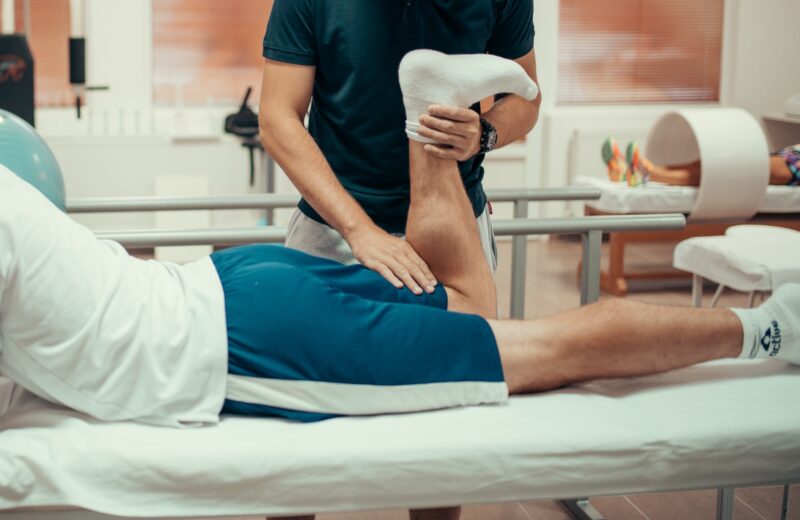
Those first few steps out of bed are the worst: a stiff, sore tendon at the back of the heel that eases as you warm up, then aches after your run. Achilles pain is one of the most common running problems in Bangalore, and it is often mishandled with rest and stretching alone.
Achilles tendinopathy is a load-related tendon problem, not simple inflammation. Rest gives temporary relief, but the tendon only recovers when it is progressively loaded: isometric holds, then heavy slow calf raises over about twelve weeks, then a graded return to running. Physiotherapy guides that progression. A sudden snap or inability to push off suggests a rupture and is urgent.
Why the Achilles Gets Sore
The Achilles is the thickest tendon in the body and stores and releases energy every time you walk, run or jump. When load rises faster than the tendon can adapt, through more mileage, hills, speed work or a return to sport after a break, its structure becomes irritated and painful.
Pain in the middle of the tendon and pain where it attaches to the heel are managed slightly differently, and heel pain is sometimes confused with plantar fasciitis on the underside. Assessment separates them.
A tendon rebuilds with heavier loading over months. Resting it and hoping is the most common reason Achilles pain keeps coming back.
Why Rest and Stretching Alone Fail
Rest calms the tendon for a few days but also reduces its capacity, so it flares again when you return. Calf stretching does little for the tendon itself and can aggravate the insertion at the heel.
Tendons need mechanical load to remodel. That is the same principle behind treating other tendon problems such as those in our ankle pain guide.
The Loading Programme That Works
Treatment usually starts with isometric calf holds for pain relief, then moves to progressive heel raises and heavy slow resistance work, repeated for roughly twelve weeks with the load increased as tolerated. Pain during exercise is monitored and kept within an agreed acceptable level.
Once strength is rebuilt, jumping and running are reintroduced in stages, as in our fitness training return-to-load approach.
Red Flags
A sudden snap or pop at the back of the ankle, a gap felt in the tendon, or being unable to push off suggests a rupture and needs urgent medical assessment. Certain antibiotics can also increase tendon risk, so tell your doctor about tendon pain if you are taking one.
Book an Achilles Assessment at Sevens Physiotherapy
At Sevens Physiotherapy in HSR Layout, Bangalore, we identify the type of Achilles problem and build a loading plan matched to your running or sport. Book at hello@sevensphysiotherapy.com or call +91 99009 01958.