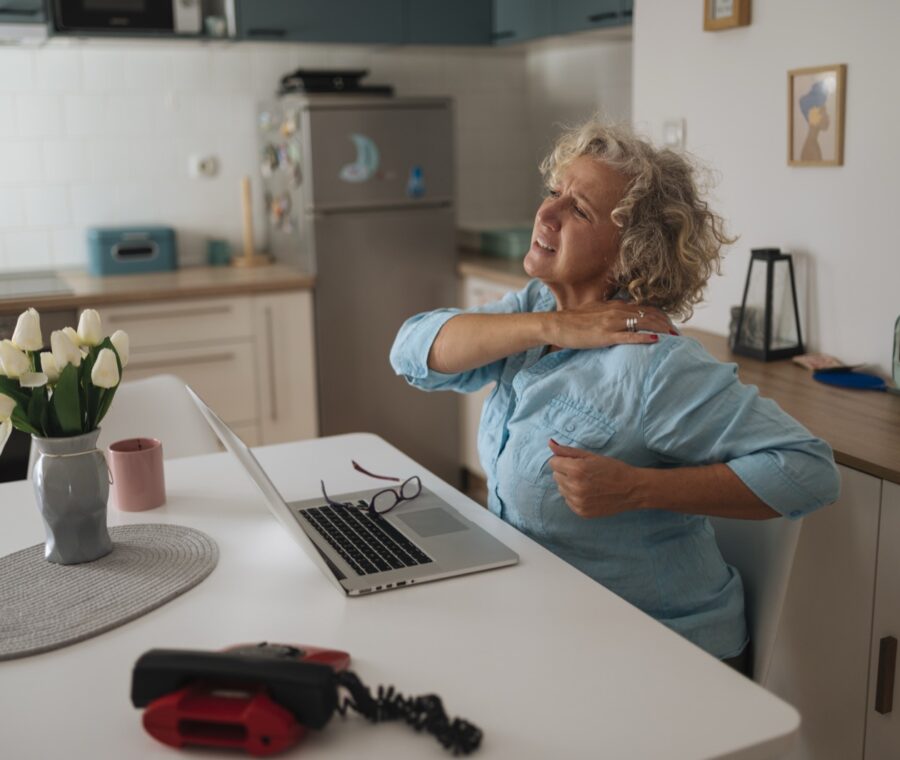
Cervical spondylosis is one of the most common diagnoses given to people in their forties, fifties, and beyond who have neck pain and visit a doctor or orthopaedic specialist. It typically comes with an X-ray or MRI report describing disc degeneration, osteophytes (bone spurs), reduced disc space, and foraminal narrowing — a list of findings that sounds alarming and permanent.
Cervical spondylotic changes are age-related and present to some degree in most adults over fifty — many people with major structural changes on imaging have no symptoms at all. The goal of physiotherapy isn’t to reverse the structural changes, which can’t be undone, but to manage pain, restore movement, and prevent flare-ups through manual therapy, deep cervical flexor strengthening, and postural correction. Most cases are managed successfully without surgery.
What these findings mean in practice is more nuanced than the report suggests. The relationship between structural findings and pain is far from straightforward — many people with significant neck pain have only mild imaging changes. This matters for treatment, because the goal is to manage the pain and stiffness effectively, maintain and improve neck function, and prevent progression where possible.
What Cervical Spondylosis Is
The cervical spine is made up of seven vertebrae separated by intervertebral discs and connected by facet joints. The discs act as shock absorbers and allow movement between vertebrae. Over time, with age and cumulative loading, the discs lose hydration and height, become less elastic, and may develop small tears in their outer wall. The vertebrae adapt to the changed load distribution by forming osteophytes — bony outgrowths at the joint margins.
These degenerative changes are part of normal ageing in a similar way that grey hair or skin wrinkling are, and they do not inevitably cause pain. When they do, it’s typically because the changes have narrowed the space for nerve roots exiting the spine, produced facet joint inflammation, or caused disc-related pain through chemical irritation or mechanical disruption.
Cervical spondylosis causing nerve root compression produces cervical radiculopathy: pain, numbness, tingling, or weakness that radiates from the neck into the arm along a specific nerve root distribution — the cervical equivalent of sciatica. The specific pattern of symptoms indicates which nerve root is affected, which informs the physiotherapy approach.
Cervical myelopathy, where the spinal cord itself is compressed rather than the nerve roots, is a more serious consequence of severe cervical spondylosis. It produces symptoms affecting gait, fine motor control of the hands, and in advanced cases bladder and bowel function — myelopathy requires surgical assessment and is a contraindication to certain physiotherapy techniques.
Why Cervical Spondylosis Causes Neck Pain
The pain arises from multiple sources simultaneously. The degenerative discs themselves can be a source of pain when their outer wall is compromised. The facet joints, affected by the changed load distribution when disc space narrows, develop osteoarthritis that produces its own pattern of pain and stiffness. The surrounding muscles develop protective tension in response to joint pain, contributing to the stiffness and the tension headaches many patients report.
Stiffness here is both structural (from the joint changes and disc degeneration) and muscular (from chronic protective tension in the paraspinal muscles), and the two interact — joint stiffness increases the demand on the muscles, and muscular tension reduces available movement and increases pain. Poor posture, particularly the forward head posture common in desk workers, accelerates the degenerative process by increasing compressive load on the anterior cervical spine and amplifying the symptoms of already-present spondylotic changes — the same mechanism behind most desk-driven ergonomic strain.
The Physiotherapy Approach
Physiotherapy for cervical spondylosis at Sevens in HSR Layout begins with a thorough assessment that determines the primary pain source, the degree of neural involvement, the range of motion limitations, the muscle tension pattern, and the postural contributors.
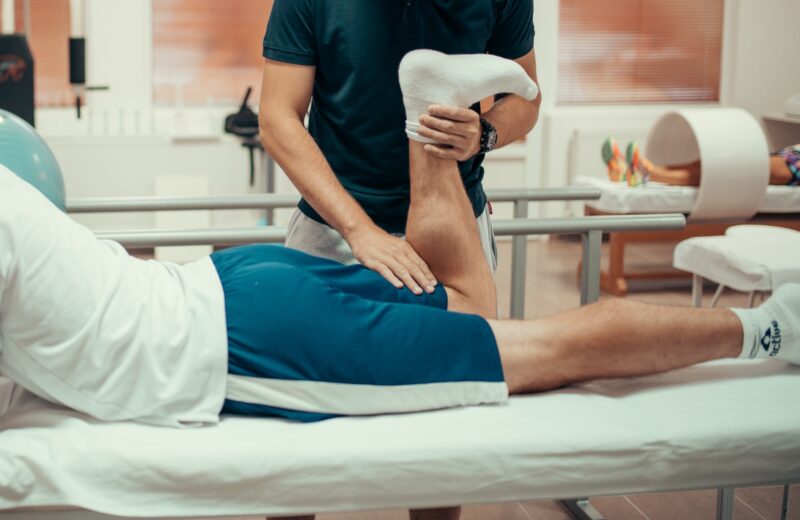
Manual therapy is central to management. Joint mobilisation targeting the stiff cervical segments restores movement lost to the degenerative changes and reduces pain through neurophysiological mechanisms — applied gently and within comfortable ranges, with high-velocity manipulation used selectively and only after appropriate screening. Soft tissue work to the paraspinal muscles, upper trapezius, suboccipital muscles, and scalenes reduces the muscular component of the stiffness and pain, and overlaps closely with how we treat shoulder pain when the two present together, which is common.
Traction — a distractive force applied to the cervical spine — reduces the compressive load on the facet joints and widens the intervertebral foramina where nerve roots exit. Manual cervical traction, applied during the session, can provide meaningful short-term relief of radicular symptoms where there’s foraminal narrowing.
Exercise is the other essential component. Strengthening the deep cervical flexors — the muscles that support the natural cervical lordosis and counteract the forward head position that compresses the anterior cervical spine — is among the most important exercises in cervical spondylosis rehabilitation. These muscles are typically weak and poorly recruited in patients with chronic neck pain. Scapular strengthening and thoracic mobility work address the postural and movement factors that contribute to cervical loading, often folded into a broader postural correction programme.
Managing Cervical Spondylosis Long-Term
Cervical spondylosis is a degenerative condition — the structural changes won’t reverse. The goal of management is to keep symptoms manageable, maintain the best possible neck function, and prevent acute exacerbations.
A home exercise programme, maintained consistently over the long term, is the most important factor in sustained symptom management. The specific exercises depend on the individual’s presentation, but typically include deep cervical flexor activation, thoracic extension, scapular retraction, and regular neck range-of-motion work. Activity modification — particularly ergonomic improvements for desk workers — reduces the daily load on the cervical spine and slows the rate of symptom escalation. Sleep posture matters too: a pillow that maintains the natural cervical lordosis reduces the overnight positional load.
Periodic physiotherapy episodes, particularly following an exacerbation, can reset the pain level and restore range of motion more quickly than home exercise alone.