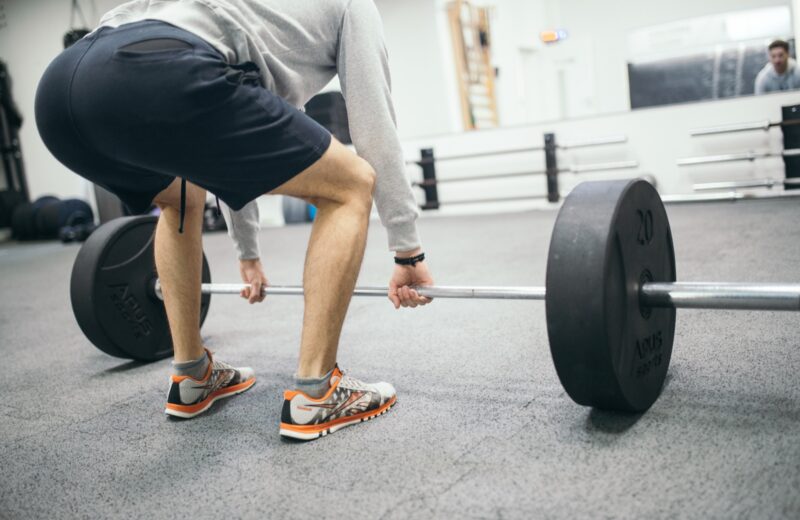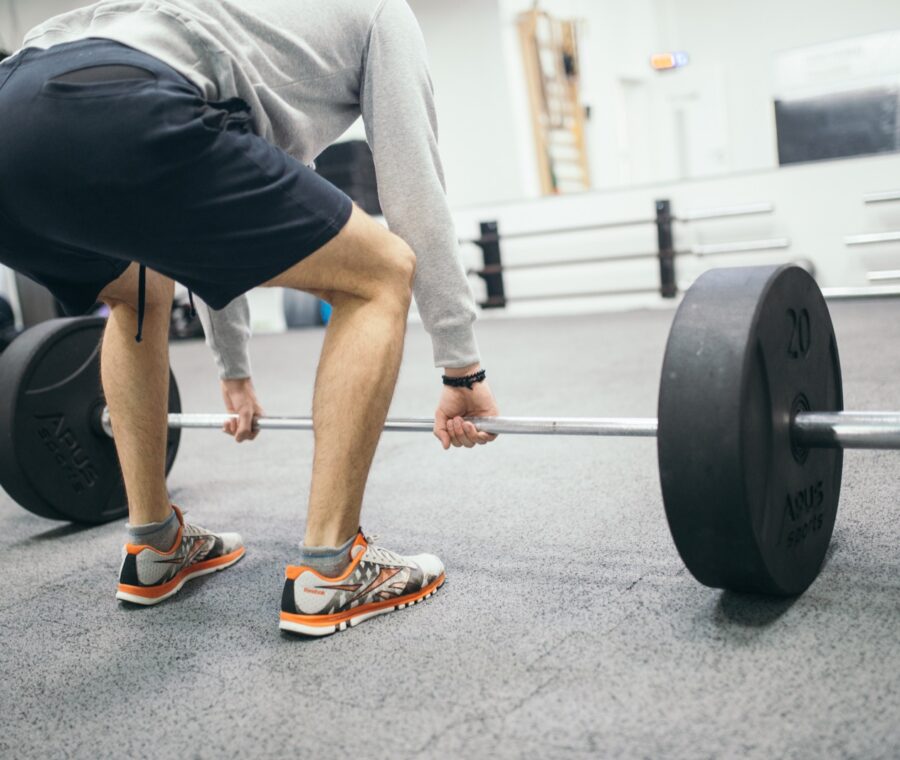
Pain is a permanent feature of hard training. Anyone who’s done a serious leg session, run a long distance with hills, or lifted heavy for the first time in a while knows what it feels like. The question that matters isn’t whether gym training causes discomfort — it’s whether what you’re feeling is normal productive training load or something telling you to stop.
Training discomfort is diffuse, builds gradually, and peaks 24-48 hours later (DOMS). Injury pain is sharper, more localised, often present during the exercise itself, and either progressively worsens within a set or lingers past when it should. Joint swelling, a sense of instability, a pop or snap, and numbness or tingling are all signals to stop immediately and get a sports injury assessment rather than train through it.
Getting this wrong in either direction is costly. Training through an actual injury lets it worsen and can turn a minor issue into months of rehabilitation. Stopping every time training is uncomfortable is a reliable way to make no physical progress at all.
This guide gives you a practical framework for telling the two apart, and a clear set of indicators for when to see a sports physiotherapist in Bangalore.
Training Discomfort vs. Injury Pain
Training discomfort is the sensation produced by working muscles hard: the burning of sustained effort near your maximum capacity, the fatigue that sets in during high-rep sets, and the diffuse soreness that peaks twenty-four to forty-eight hours after a session — delayed-onset muscle soreness, or DOMS. These are produced by the physiological demands of training and are a normal consequence of progressive overload.
Injury pain is qualitatively different. It’s typically sharper, more localised, and often present during the exercise rather than after it. It may be sudden in onset, particularly if a structure has been acutely overloaded.
A few characteristics reliably distinguish the two. Sharp or stabbing pain is almost never a normal training sensation. Pain with a specific, identifiable location — rather than a diffuse area — is more likely to reflect tissue damage than general fatigue. Pain that persists well beyond the session, or is present at rest the next morning (as distinct from DOMS, which is sore only with movement and pressure), warrants attention. And pain that progressively worsens during a set rather than plateauing is a signal to stop right there.
Common Gym Injuries That Need a Physiotherapy Assessment
Tendon pain is among the most common presentations in gym-goers, and one of the most commonly mismanaged. Tendons respond to excessive loading — particularly rapid increases in volume or intensity — with a characteristic pattern: pain at the start of exercise, warming up after a few minutes, then often returning once exercise ends. Common sites include the patellar tendon in squatters and jumpers, the Achilles in runners and those doing significant calf work, and the rotator cuff tendons in overhead lifters.
Tendon pain following this pattern isn’t a reason to stop all activity, but it is a reason to see a physiotherapist — tendinopathy needs a carefully graduated loading programme to restore the tendon’s load tolerance, or it settles into the chronic pattern that comes from alternating rest and overload without real rehab.
Shoulder pain during or after pressing exercises often reflects rotator cuff pathology, subacromial impingement, or AC joint irritation — shoulder mechanics during the bench press, overhead press, and dumbbell fly are demanding on the rotator cuff. A sharp catch at the top of a press, pain travelling into the upper arm, or a shoulder that hurts to lie on afterward are all signals for assessment. Pressing through significant rotator cuff pain is a reliable way to turn a manageable early-stage problem into a real tear.
Knee pain during squatting has multiple potential sources. Patellofemoral pain syndrome — pain under or around the kneecap with squatting and stairs — is among the most common. IT band syndrome produces pain on the outside of the knee; patellar tendinopathy produces pain at the base of the kneecap. Each has specific distinguishing features and a specific treatment approach.
Lower back pain during or after deadlifts and squats may reflect disc irritation, facet joint loading, or muscular strain. Lifting through severe back pain is high-risk. For mild, brief, clearly position-related discomfort, technique review is the starting point; for pain that’s severe, radiating, or affecting the legs, a physiotherapy assessment should come before any further loading.
Signs You Shouldn’t Ignore
A handful of symptoms at the gym are clear indicators to stop immediately and get assessed.
Joint swelling after a session is not a normal training response — it indicates the joint has been stressed beyond its normal tolerance, typically from ligament strain, cartilage damage, or joint irritation. Training on a swollen joint before it’s assessed risks worsening the underlying injury. A sensation of giving way or instability in a joint, particularly the knee or ankle, points to a structural problem affecting the joint’s stability mechanism and may reflect a ligament injury.
Sudden acute pain during exercise, especially one accompanied by a pop, snap, or crack, is a red flag — ligament ruptures, muscle tears, and tendon ruptures all produce sudden-onset pain, often with these sounds. Stop immediately and get assessed. Numbness or tingling in a limb during or after exercise is a neurological symptom: in the upper limb during lifting it may reflect thoracic outlet syndrome, cervical nerve root irritation, or cubital tunnel syndrome; in the lower limb, lumbar nerve root involvement. Both need a proper assessment to identify the source.
When to See a Sports Physiotherapist Rather Than Your Trainer
Your trainer can adjust programming, watch your technique, and support your progress. They’re not equipped to diagnose injury or prescribe rehabilitation. A few situations specifically call for physiotherapy: any pain that’s persisted more than two weeks despite reduced load and self-management, pain that changes how you move during training, pain present at rest or that wakes you at night, any of the acute red flags above, or a recurring pain pattern that’s becoming more frequent.
Early assessment is consistently better than waiting. Minor injuries addressed promptly are typically resolved in a small number of sessions. The same injury trained through for months becomes considerably more complex and time-consuming to rehabilitate.