Hip pain is a broad symptom that covers a wide range of different conditions, each with different causes, different locations of pain, different aggravating factors, and different treatment requirements. The hip joint itself, the surrounding bursae, the muscles that cross the joint, the hip labrum, the tendons, and referred pain patterns from the lumbar spine all produce symptoms in the hip and buttock region.
Hip pain has several distinct causes that need different, sometimes opposite, treatment — gluteal tendinopathy (outer hip), hip flexor strain or iliopsoas tendinopathy (front of hip), labral tears and FAI (deep groin with catching), or pain referred from the lumbar spine. Getting the diagnosis right matters because the exercises that help one condition can worsen another. A proper physiotherapy assessment identifies which structure is actually the problem before treatment starts.
Getting the diagnosis right matters enormously because the treatments for these conditions are not interchangeable. The exercises that help gluteal tendinopathy worsen greater trochanteric bursitis. The stretches commonly prescribed for hip pain can aggravate labral tears. The physiotherapist’s job is to identify which structure is causing the problem and direct treatment accordingly.
Hip Flexor Strains and Iliopsoas Problems
The hip flexors, primarily the iliopsoas muscle (made up of the iliacus and psoas major), bring the thigh toward the body in activities like running, kicking, and climbing stairs. Hip flexor strains occur when the muscle is overloaded, typically during sprinting, kicking, or explosive leg movements.
The pain is typically felt at the front of the hip or groin, is aggravated by lifting the knee against resistance, and may produce a clicking or snapping sensation in some presentations (a separate condition called coxa saltans or snapping hip syndrome, caused by the iliopsoas tendon snapping over a bony prominence). Iliopsoas tendinopathy produces similar anterior hip pain but relates to overuse rather than an acute strain, and is common in runners and athletes doing high volumes of hip flexion-dominant activity — a pattern that turns up regularly across sports injury presentations more broadly.
Treatment includes initial load reduction, progressive strengthening of the hip flexors through their full range, and addressing any training errors or biomechanical factors that contributed to the overload.
Gluteal Tendinopathy and Trochanteric Pain Syndrome
Gluteal tendinopathy is one of the most common causes of lateral hip pain — the pain felt on the outer hip at or around the greater trochanter. It’s more common in women, particularly perimenopausal or postmenopausal, and in runners.
Despite its name, greater trochanteric pain syndrome is a tendinopathy rather than a bursitis in the majority of cases — the bursa overlying the greater trochanter is often just reactive to the underlying tendon problem, not the primary source of pain.
The key feature is load sensitivity. The tendon gets compressed against the bone in certain positions, and these positions reliably provoke pain: crossing the legs, sitting with hips adducted, sleeping on the affected side, and walking up hills are among the most common aggravating factors. Standing with weight shifted to the painful side, though instinctive, actually increases the compressive load on the tendon.
Treatment centres on removing the compressive loads on the tendon, particularly early on, combined with progressive gluteal strengthening. The programme is specific: it must avoid the compressive positions while progressively loading the tendon in its non-compressive range — a distinction between helpful and harmful loading that isn’t intuitive, which is exactly why this needs physiotherapy guidance rather than a generic exercise sheet.
Hip Labral Tears
The acetabular labrum is a ring of fibrocartilage around the rim of the hip socket that deepens the socket and contributes to hip stability. Labral tears are more common in people with hip morphological abnormalities (cam or pincer lesions) but can also occur in athletes from repetitive pivoting and loading movements.
Labral tears produce a characteristic pattern: deep groin or anterior hip pain, often with a catching or clicking sensation, aggravated by prolonged sitting, sustained hip flexion, and specific rotational movements — typically reproduced by the flexion-adduction-internal rotation (FADIR) test. Physiotherapy focuses on hip strengthening and movement retraining that reduces the abnormal loads on the labrum. For cases with significant ongoing pain or mechanical symptoms despite conservative management, orthopaedic assessment for arthroscopic repair may be appropriate.
Femoroacetabular Impingement (FAI)
FAI occurs when there’s abnormal contact between the femoral head and the acetabular rim due to morphological variations in the shape of either structure. The cam variant involves an aspherical femoral head; the pincer variant involves overcoverage of the femoral head by the acetabulum.
FAI produces anterior groin pain with activities involving hip flexion, particularly combined with internal rotation. It’s common in athletes who performed high-volume hip-loading activity in youth, while the bones were still forming. Physiotherapy focuses on movement pattern modification to reduce impingement, hip strengthening, and activity modification — surgical management is considered when conservative treatment fails.
Referred Pain from the Lumbar Spine
Not all pain experienced in the hip region originates in the hip. The lumbar spine, sacroiliac joint, and lumbar nerve roots all refer pain patterns into the buttock, hip, and groin region — L2/L3 nerve root involvement commonly refers to the anterior thigh, the sacroiliac joint commonly refers to the buttock, and the lumbar facet joints can refer to the hip, closely overlapping with how back pain itself gets assessed. Distinguishing genuine hip joint pain from referred pain requires a careful examination that assesses both the hip and the lumbar spine — physiotherapists are trained to make this distinction and direct treatment at the actual source, which matters just as much for anterior groin pain presentations that can look identical to a hip flexor strain on the surface.
Assessment at Sevens Physiotherapy
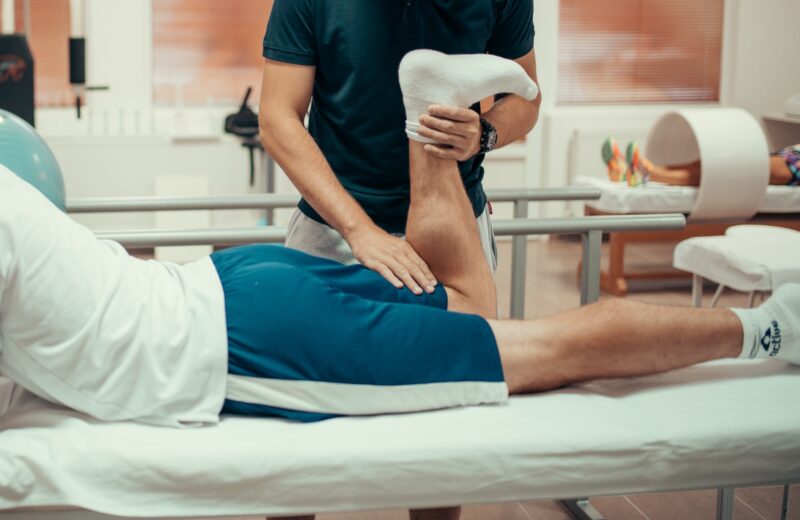
Hip pain assessment at Sevens in HSR Layout begins with a detailed history that characterises the pain, identifies the aggravating factors, and narrows the list of possible diagnoses. Physical examination includes hip range of motion assessment, specific provocation tests for the major conditions (FADIR, FABER, Thomas test, Ober’s test, SLR), and assessment of the lumbar spine where relevant. The assessment findings determine the specific programme, which is why hip pain treatment is more effective when it’s diagnosis-specific rather than generic.