The pain arrives predictably. You start your run feeling fine. At around five kilometres, or sometimes earlier if you’re running with hills, a sharp, burning sensation appears on the outside of your knee. You slow down, it eases. You pick the pace back up, and within minutes it’s back. Eventually you stop running entirely and it fades, only to return with the same clockwork precision on your next run.
IT band syndrome isn’t caused by the band rubbing against the knee — that theory is outdated. It’s compressive load on a sensitive fat pad beneath the band, usually driven by weak hip abductors letting your knee track inward as you run. Foam rolling the band itself does nothing, since it’s connective tissue, not muscle. Fixing it means hip strengthening plus a graduated return to running, not rest alone.
This is IT band syndrome. Iliotibial band syndrome, to use its full name, is one of the most common running injuries seen in sports physiotherapy clinics, and it’s also one of the most persistently mismanaged. Many runners spend months foam rolling, stretching, and resting only to return to running and experience the same problem within a few kilometres.
Understanding why IT band syndrome develops and what sports injury physiotherapy in Bangalore should actually address makes the difference between a condition that lingers for a season and one that resolves permanently.
What the IT Band Is and Why It Is Not the Problem You Think It Is
The iliotibial band is a thick band of connective tissue that runs down the outside of the thigh from the iliac crest of the pelvis to the lateral aspect of the knee. It’s not a muscle and cannot be stretched in the conventional sense — a fact that immediately explains why foam rolling and stretching the IT band itself rarely resolves the condition.
For decades, IT band syndrome was understood as a friction syndrome: the band was thought to rub against the lateral femoral condyle as the knee repeatedly bent and straightened during running, causing local inflammation and pain. This explanation drove a generation of treatment focused on reducing the alleged friction through foam rolling, ice, and anti-inflammatory medication.
More recent research has challenged this model. The current understanding is that the pain is generated in the highly innervated fat pad that sits beneath the IT band at the lateral knee, which is compressed rather than rubbed by the band under certain loading conditions.
This distinction matters because it shifts the treatment focus from the IT band itself to the factors that control how much compressive load the lateral knee fat pad receives.
Why IT Band Syndrome Develops in Runners
The compressive load on the lateral knee fat pad increases when the knee is in a specific range of flexion, typically around thirty degrees — precisely where the knee is during the stance phase of running. Several biomechanical factors increase this compressive load.
Hip abductor weakness is one of the most consistently identified contributors. The gluteus medius and tensor fascia latae both attach into the IT band. When the hip abductors are weak, the pelvis drops on the unsupported side during running, which causes the thigh to adduct inward and the knee to track medially. This changes the angle at which the IT band loads the lateral knee and significantly increases the compressive force on the fat pad.
Running volume is another major factor. IT band syndrome is almost always a relative overload problem. The tissue isn’t injured because it’s inherently vulnerable; it’s injured because the training load increased faster than the tissue’s capacity to adapt. This is why the condition is common among people who’ve recently increased their weekly mileage, changed their running surface, or added hills to their training.
Foot mechanics can contribute in some cases, particularly excessive pronation, which alters the mechanics at the knee during the stance phase of running. However, this is a contributing factor rather than the primary cause in most presentations.
Why Rest and Foam Rolling Are Not Enough
Rest removes the load that’s causing the pain, which provides relief. But the hip abductor weakness and running mechanics that caused the condition to develop in the first place haven’t changed. When running resumes, the same factors are present, and the same condition reasserts itself.
Foam rolling the IT band, which is a dense connective tissue structure rather than a muscle, doesn’t stretch it or release it in any meaningful sense. It may reduce tension in the tensor fascia latae, which does have a muscular component, and that can modestly improve lateral knee symptoms — but it doesn’t address the primary biomechanical contributors.
Effective treatment needs to address three things simultaneously: reducing the immediate compressive load on the lateral knee to allow symptom resolution, strengthening the hip abductors and improving pelvic stability during running, and modifying the training programme to allow a graduated return to running that doesn’t recreate the overload.
Sports Physiotherapy for IT Band Syndrome at Sevens
At Sevens Physiotherapy in HSR Layout, IT band syndrome is assessed as a sports injury, which means the assessment includes a full running gait analysis, not just an isolated examination of the knee.
Watching how a patient runs — pelvis drop, knee tracking, foot strike pattern, step rate — provides information that a static assessment can’t. The gait analysis identifies the specific biomechanical contributors in that individual, which determines the focus of the treatment programme.
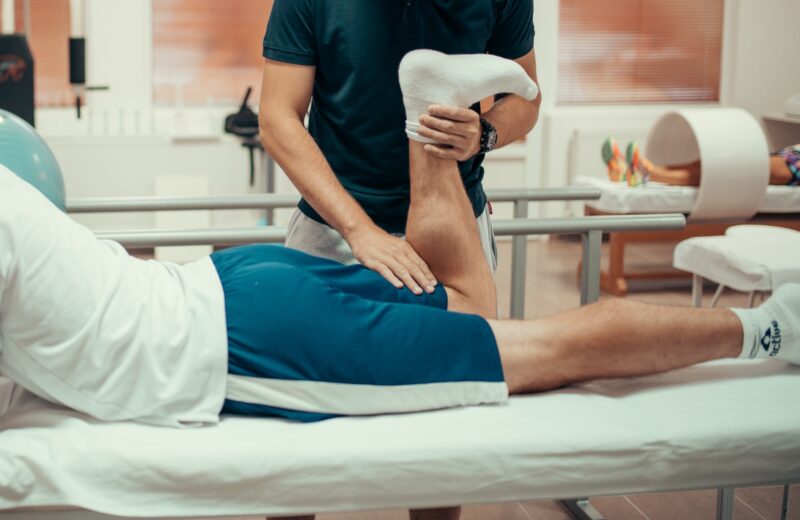
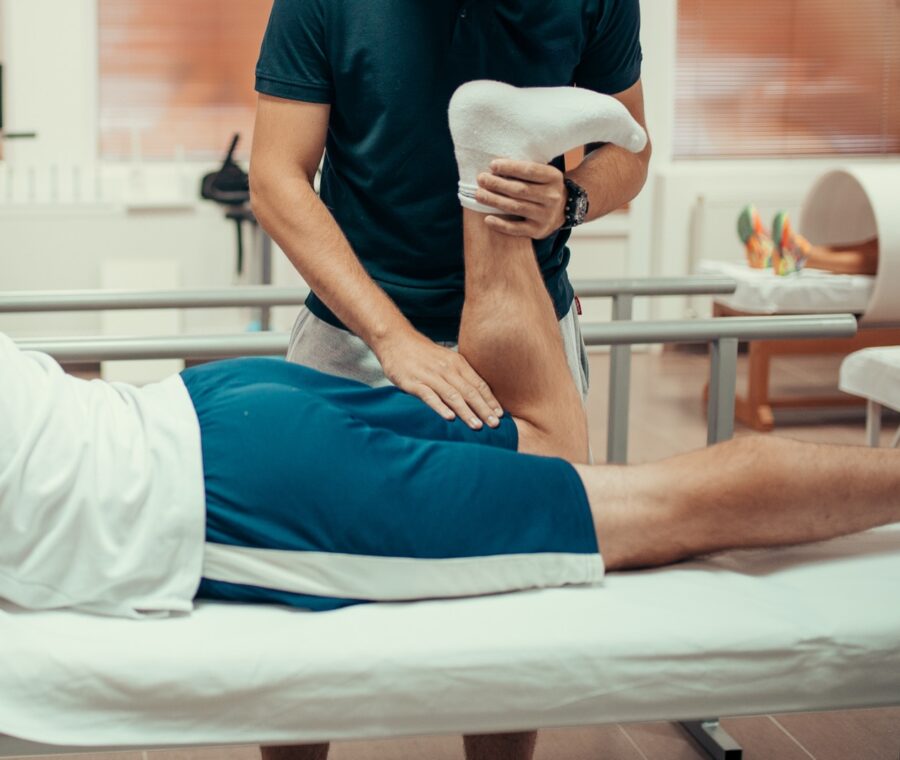
The rehabilitation programme typically includes hip abductor and gluteal strengthening, calf strength and landing mechanics work where relevant, progressive running reintroduction using a structured return-to-running protocol, and, where appropriate, manual therapy to the hip, thoracolumbar fascia, and lateral knee soft tissue.
Taping is often used in the early stages to offload the lateral knee and allow continued low-level running while the strength work progresses. Kinesiology tape applied to support the pelvis and lateral knee can meaningfully reduce pain during running and allows the patient to maintain their fitness while rehabilitating.
Most runners with IT band syndrome are able to maintain some running throughout their rehabilitation rather than stopping entirely. The key is modifying the load appropriately while the underlying strength deficits are addressed.
Returning to Running Without Recurrence
The goal of IT band syndrome treatment isn’t just to get the runner back to their previous mileage but to ensure they have the strength and mechanics to sustain it without recurrence. This requires a return-to-running protocol that’s graduated and objective, progressing mileage and intensity based on the response of the knee rather than a fixed timeline.
Strength testing at the end of the programme provides the objective data to make this determination rather than relying on pain absence alone, since pain often resolves before the underlying strength deficits are fully corrected.
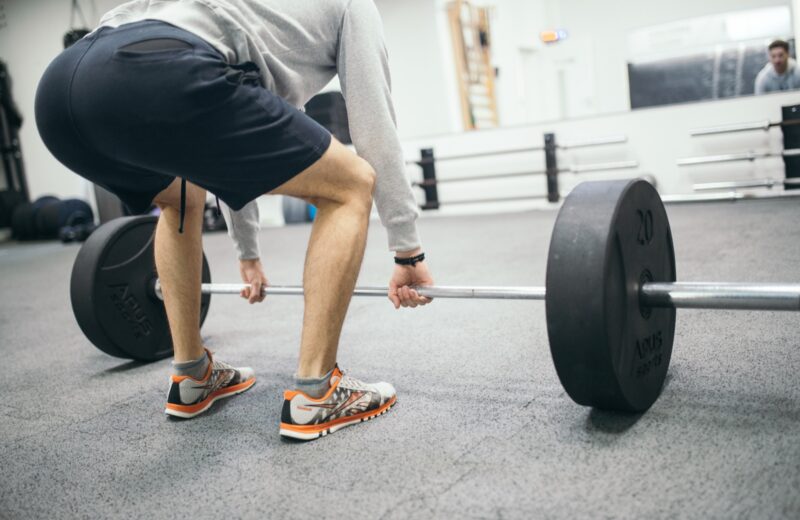
Long-term, runners with a history of IT band syndrome benefit from incorporating regular gluteal and hip abductor strengthening into their training routine as a maintenance strategy. This isn’t as burdensome as it sounds; two sessions a week of targeted hip work is typically sufficient to maintain the strength needed to prevent recurrence.