There’s a very specific kind of pain that most people with plantar fasciitis know well. You wake up, put your feet on the floor, take your first step, and a sharp, stabbing sensation shoots through the bottom of your heel. For the first few minutes of walking it’s severe. Then, as the tissue warms up, it eases to a background ache. By the time you sit down at your desk, it’s largely faded.
And then the next morning it’s back.
That first-step morning pain is almost diagnostic of plantar fasciitis — degenerative tissue changes in the fascia, not inflammation, which is why anti-inflammatories only help temporarily. Rest reduces the pain but doesn’t rebuild the tissue’s capacity. Effective treatment progressively loads the fascia (calf raises, stretching) and fixes the contributing factors, usually within 6 to 12 weeks.
This pattern is almost diagnostic of plantar fasciitis, and it’s one of the most common causes of heel pain seen at physiotherapy clinics. It affects runners, people who spend long hours on their feet, office workers who walk little but carry excess body weight, and many others. The frustrating thing isn’t just the pain — it’s the way it seems to improve during the day, which leads many people to believe it’s getting better, only to be reminded the following morning that it isn’t.
Plantar fasciitis treatment in Bangalore has become more evidence-based in recent years, and the outcomes with proper physiotherapy are genuinely good. Most people recover fully. The key is understanding what’s actually wrong and applying the right treatment rather than cycling through rest, orthotics, and anti-inflammatory gels that address the symptom but not the cause.
What Is the Plantar Fascia and Why Does It Get Injured?
The plantar fascia is a thick band of connective tissue that runs along the bottom of the foot from the heel bone to the base of the toes. Its job is to support the arch of the foot and act as a spring during walking and running, storing and releasing energy as the foot contacts and leaves the ground.
Plantar fasciitis, despite its name, is not actually an inflammatory condition in most cases. Research over the past two decades has shown that the tissue changes in people with heel pain are degenerative rather than inflammatory: the collagen fibres are disorganised, and the tissue is thickened and poorly vascularised. This is why anti-inflammatory medications often provide only temporary relief, and why it’s technically more accurate to call the condition plantar fasciopathy.
The condition develops when the cumulative load on the plantar fascia exceeds the tissue’s capacity to adapt — a sudden increase in running mileage, prolonged standing on hard floors, an increase in body weight, a change in footwear, or a combination of these factors.
The morning pain pattern is explained by the overnight shortening of the fascia. The first steps of the morning suddenly load this shortened tissue, and the pain is the result of micro-trauma at the point where the fascia meets the heel bone.
Why It Keeps Coming Back If Not Treated Properly
Many people with plantar fasciitis manage it rather than treat it. They rest when it’s bad, use ice when it’s sore, wear supportive footwear, and avoid activities that aggravate it. The pain decreases, they return to normal activity, and several months later the cycle repeats.
The reason is that rest alone doesn’t restore the tissue’s capacity. The plantar fascia is a load-bearing structure — removing the load removes the pain stimulus but doesn’t repair the degenerative tissue changes or address what caused the overload in the first place.
Effective treatment needs to do two things: progressively load the plantar fascia to stimulate tissue remodelling, and address the contributing factors that caused the condition to develop. These commonly include tight calf muscles, reduced ankle dorsiflexion range of motion, weakness in the intrinsic foot muscles, poor hip stability, and footwear that provides inadequate arch support for the individual’s foot type.
What Physiotherapy Does for Plantar Fasciitis
A physiotherapy assessment for plantar fasciitis begins by confirming the diagnosis, since not all heel pain is plantar fasciitis, and identifying the specific contributing factors in that individual — ankle dorsiflexion range, calf flexibility and strength, intrinsic foot muscle strength, foot arch type, gait, and footwear history.
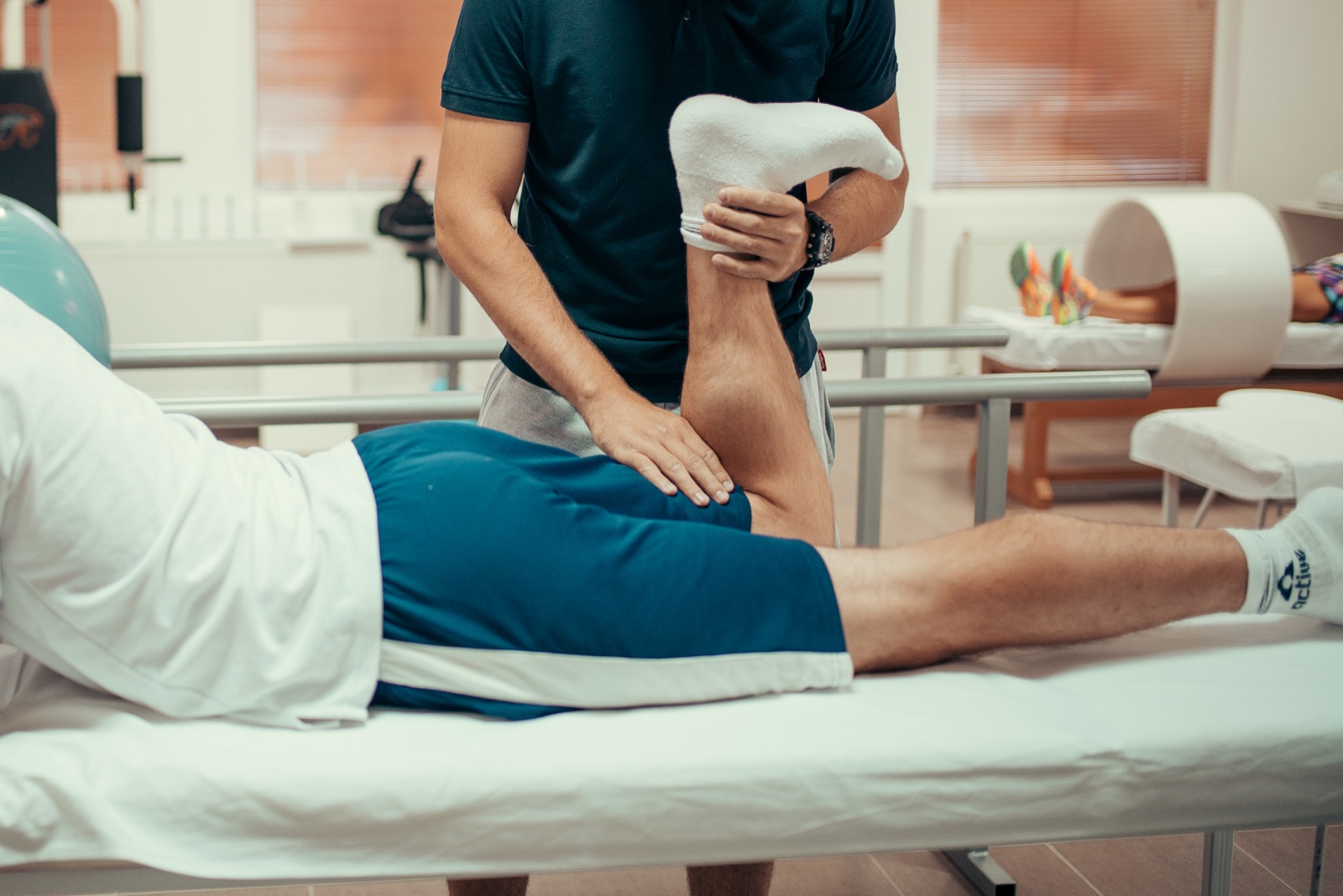
From there, treatment follows a structured approach. Manual therapy — soft tissue work to the calf complex and plantar fascia — improves tissue mobility and reduces local irritation, providing faster initial pain relief than exercises alone.
Progressive loading through heel raises and plantar fascia stretching is the most important intervention for tissue remodelling. The Alfredson protocol, originally developed for Achilles tendinopathy, has been adapted for plantar fasciitis and involves progressive loading through a high-repetition, twice-daily heel raise programme, stimulating the collagen remodelling that gradually restores the tissue’s structural integrity.
Night splints worn during sleep maintain the ankle in a dorsiflexed position, preventing the overnight shortening of the plantar fascia and significantly reducing morning pain — often one of the most impactful interventions for early-stage symptom management. Footwear advice, orthotics where indicated, and a graduated return to loading activities complete the programme.
A small number of chronic cases benefit from additional interventions such as dry needling or shockwave therapy — and for anyone whose heel pain started after ramping up training, it’s worth reading alongside our broader guide to sports injuries, since load management applies the same way.
What You Can Do at Home Right Now
Several interventions are safe and effective for self-management alongside professional treatment.
Calf stretching is one of the most reliably effective home interventions. Both the gastrocnemius and soleus need to be stretched, since both contribute to tension in the Achilles-plantar fascia continuum. Perform both stretches daily, holding for at least thirty seconds, and repeat two to three times on each side.
The plantar fascia stretch, done by pulling the toes toward the shin before taking the first step in the morning, reduces the micro-trauma of that first loaded step. Doing this before getting out of bed makes a meaningful difference to morning pain.
Avoid prolonged barefoot walking on hard floors during the acute phase — the plantar fascia receives no shock absorption from a tiled or wooden floor without footwear, and this is a significant aggravating factor for many patients.
Roll a frozen water bottle along the underside of the foot for five to ten minutes in the evening. This provides local pain relief and mild soft tissue work to the plantar fascia.