Walk into any pilates studio in Bangalore and you’ll find two distinct things: mats on the floor and large spring-loaded machines called reformers. Studios tend to promote both, and instructors often have strong opinions about which is superior. New clients, understandably, have no idea what they’re getting into or which option is actually right for their body.
Neither is “better” — they’re different tools. Mat pilates uses bodyweight and teaches foundational control; the reformer’s adjustable springs let a clinician modify resistance and range for injuries, post-surgical cases, or disc pathology. A well-run clinical pilates programme uses both, moving between them as your strength and control improve.
The honest answer is that reformer pilates and mat pilates are different tools. One is not better than the other in an absolute sense — they suit different bodies at different stages of training, and when supervised by a clinician rather than a general fitness instructor, both can be profoundly useful for rehabilitation.
This guide explains the real mechanical and clinical differences between the two, cuts through the marketing language, and helps you decide which form of pilates belongs in your recovery or fitness programme.
What Is Mat Pilates and What Does It Actually Train?
Mat pilates is the original form of the practice developed by Joseph Pilates in the early twentieth century — performed on a firm mat, using bodyweight as the primary resistance. The exercises focus on breath, spinal articulation, core stability, and controlled movement through lying, seated, kneeling, and standing positions.
Mat pilates is excellent for teaching foundational movement patterns. Exercises such as the hundred, the roll-up, and leg circle progressions demand precise coordination between the deep stabilising muscles of the trunk and the larger prime mover muscle groups. Because the only resistance is bodyweight, the exercises require genuine muscle activity to create stability against gravity.
The limitation of mat pilates is that it’s unmodified. A person with significant back pain, a recent surgical repair, or a major weakness in a muscle group may find certain mat exercises too challenging or even aggravating — this is where clinical mat pilates, supervised by a physiotherapist, diverges sharply from a general mat class. A clinician on the floor can modify every exercise in real time, reduce the lever arm, change the range of motion, and progress or regress the difficulty based on what they’re seeing in your movement quality.
What Is Reformer Pilates and Why Is the Machine Useful?
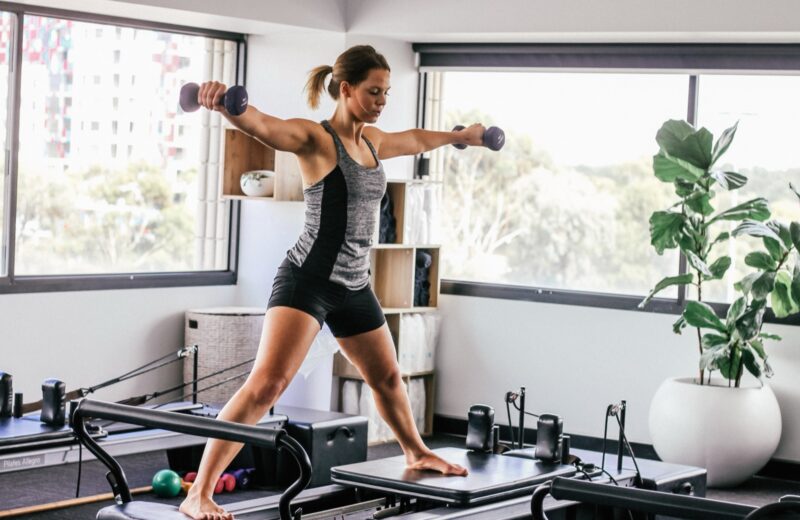
The reformer is a spring-resisted sliding platform with a footbar, shoulder rests, and a series of ropes and pulleys. The springs can be adjusted to add or reduce resistance, and the sliding carriage changes the mechanical context of the exercise depending on whether you’re pushing or pulling.
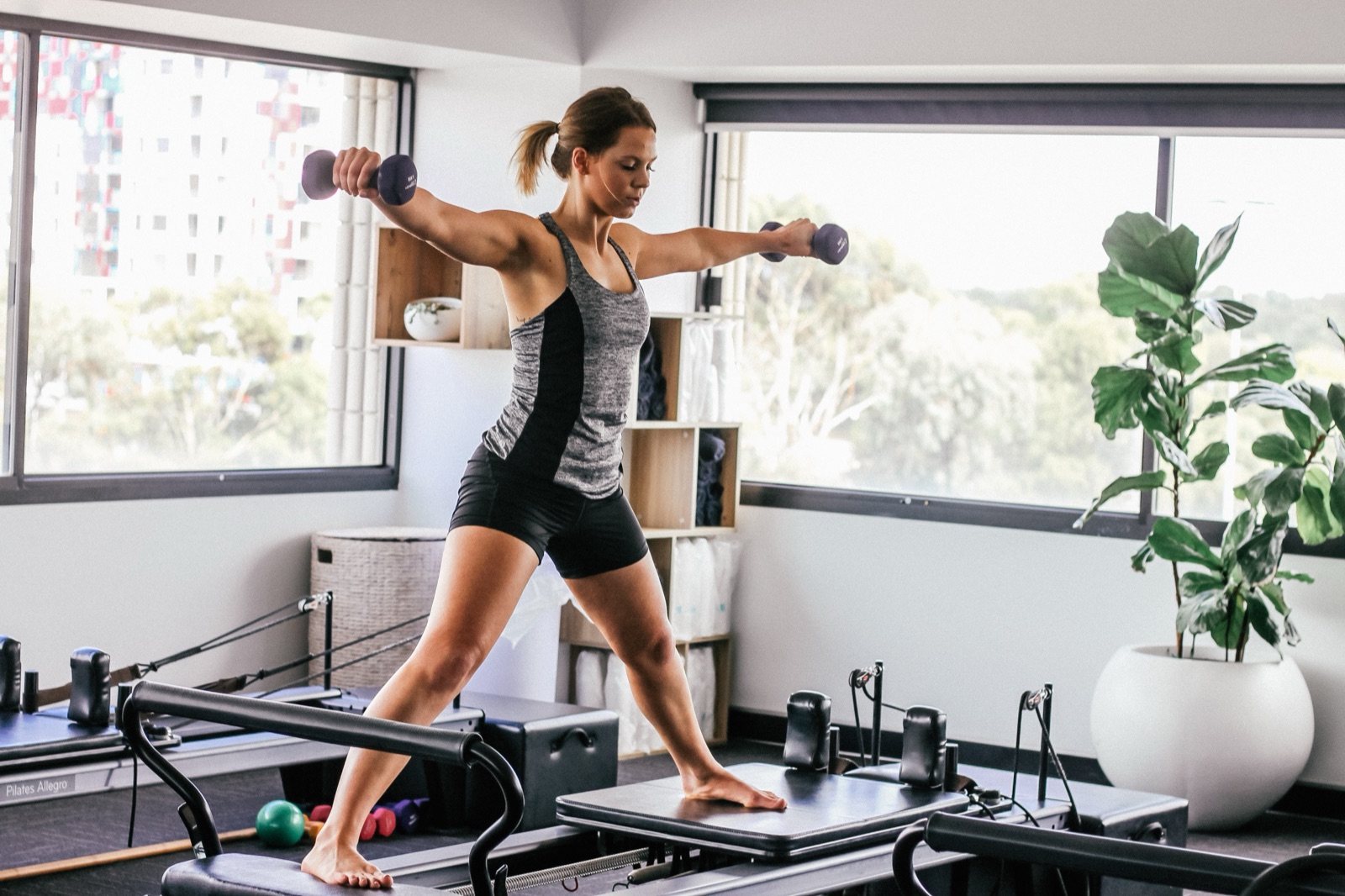
This adjustability is what makes the reformer clinically powerful. A patient recovering from knee surgery can perform leg press movements at very low resistance through a carefully controlled range, building strength without the compressive joint load a bodyweight squat would produce. A person with shoulder impingement can use it for controlled rotator cuff activation that would be impossible to load appropriately on a mat.
The reformer also allows decompressed spinal positions — exercises performed lying on the carriage remove gravitational load from the spine, which makes it particularly useful for patients with disc pathology or post-surgical spinal cases where axial loading needs to be minimised early on.
The skills built on the reformer need to eventually transfer to functional movements in the real world — which is why well-designed clinical pilates programmes use both the reformer and the mat, progressing from one to the other as strength and motor control improve.
Clinical Pilates vs. Studio Pilates: The Distinction That Actually Matters
The reformer vs. mat question is important, but there’s a more fundamental distinction that determines whether pilates is likely to help you or merely entertain you: whether it’s clinical or general.
A general pilates class, whether mat or reformer, is taught by a fitness instructor. Classes typically have ten to twenty people; the instructor demonstrates exercises, walks the room, and offers broad cues. Fine for a generally healthy person — but risky for anyone with a specific injury.
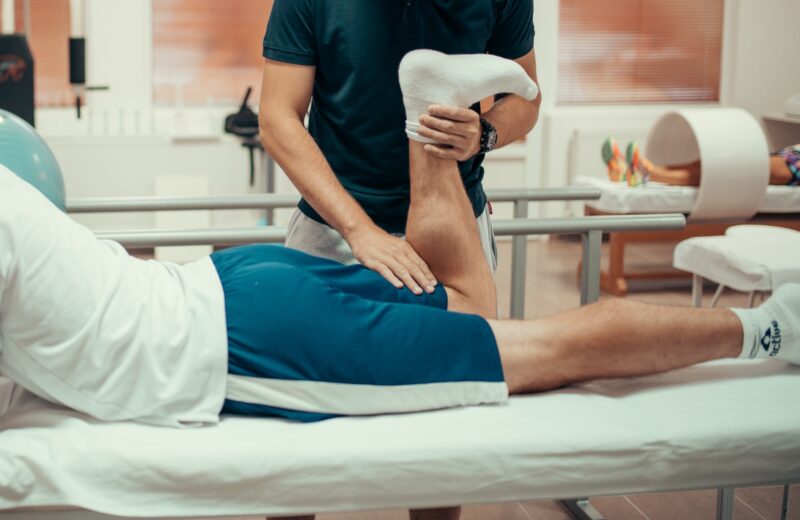
Clinical pilates, as offered at Sevens Physiotherapy in HSR Layout, is fundamentally different. Sessions are supervised by a registered physiotherapist, and every exercise is selected and modified based on the specific pathology and goals of each individual — a person with a disc herniation and a person with post-surgical knee pain aren’t put through the same programme.
Who Should Choose What
Mat pilates is a good starting point for people who are relatively healthy, have good general mobility, and want to build core strength and body awareness. It’s also a logical final stage of rehabilitation, once someone has recovered and is transitioning back to general fitness.
Reformer pilates suits people who need the ability to modify resistance and range of motion — which includes most people in rehabilitation, particularly post-surgical patients, people with spinal injuries or disc pathology, and older adults who need a lower-impact option.
A clinical pilates programme run by a physiotherapist will typically assess which combination of mat and reformer best serves your needs, and move you between the two as your capacity changes. The machine is a tool, not a destination.
What to Expect from Your First Clinical Pilates Session
Your first session begins with an assessment. Your physiotherapist looks at how you move, identifies the specific weaknesses or restrictions relevant to your condition, and uses that to set your starting exercises.
The first few sessions are intentionally conservative — not because the exercises aren’t challenging, but because good rehabilitation prioritises quality of movement over load, and the early sessions establish the standards everything else is built on. You’ll leave with a clear understanding of which exercises you’re doing, why, and what the progression looks like, plus a home programme.
Most people notice improved body awareness and a reduction in pain within the first two to three weeks. Meaningful strength gains and postural improvements become apparent by week four to six.