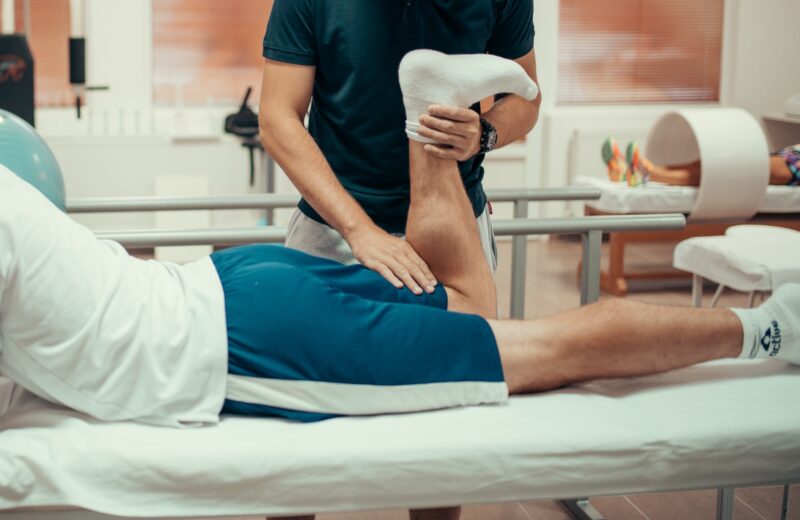
Pain that travels from the lower back or buttock down the leg is one of the most alarming symptoms people bring to a physiotherapy clinic. It’s also one of the most commonly misdiagnosed.
Both can send pain down the leg, but they come from different places. True sciatica is a nerve root being compressed at the spine, usually by a disc — aggravated by sitting, relieved by standing, often with neurological signs like weakness or numbness. Piriformis syndrome is the sciatic nerve being irritated by a tight muscle in the buttock — spinal exam is normal, but direct pressure on the buttock reproduces it. They need different treatment, so the diagnosis matters more than the symptom list.
The two most frequent causes of this pattern of pain are true sciatica, which involves compression or irritation of the sciatic nerve root in the lumbar spine, and piriformis syndrome, which involves irritation of the sciatic nerve by the piriformis muscle in the buttock. These two conditions feel similar from the patient’s perspective but are mechanically distinct, respond to different treatments, and require different approaches to activity modification and rehabilitation.
Getting the diagnosis right from the outset saves months of misdirected treatment. This guide explains how the two conditions differ, how a physiotherapist distinguishes between them, and what effective treatment looks like for each.
What Is Sciatica and What Causes It?
Sciatica is not a diagnosis in itself. It’s a symptom: pain, and sometimes numbness, tingling, or weakness, that travels along the course of the sciatic nerve. The term is used loosely in everyday conversation to describe any pain that radiates down the leg, but in clinical practice it refers specifically to symptoms caused by irritation or compression of the sciatic nerve roots, which exit the spine at the lumbar and sacral levels.
The most common cause of true sciatica in younger adults is lumbar disc pathology. When an intervertebral disc bulges or herniates, the displaced disc material can press on the adjacent nerve root, causing the characteristic radiating pain. The specific nerve root affected determines the distribution of symptoms: L4 nerve root involvement causes symptoms to the medial leg and shin; L5 involvement causes symptoms to the lateral leg and top of the foot; S1 involvement causes symptoms to the posterior thigh, lateral calf, and lateral foot.
Other causes of true sciatica include foraminal stenosis, where the opening through which the nerve exits the spine narrows due to arthritic changes, and less commonly, spinal tumour or infection. These more serious causes are associated with red flag symptoms that warrant urgent medical assessment.
The pain of true sciatica typically has a clear relationship to spinal position. Symptoms are often aggravated by sitting and relieved by standing or lying, particularly in disc-related cases.
What Is Piriformis Syndrome?
The piriformis is a small, deep external rotator muscle in the buttock that runs from the sacrum to the greater trochanter of the femur. The sciatic nerve, in approximately eighty-five percent of people, runs directly beneath the piriformis. In a small percentage of people, the nerve passes through the muscle itself.
Piriformis syndrome occurs when the piriformis muscle becomes tight, irritated, or in spasm and directly compresses or irritates the sciatic nerve in the buttock. The result is buttock pain and, in many cases, pain, tingling, or numbness radiating down the back of the thigh in a similar pattern to true sciatica.
The critical difference is that in piriformis syndrome, the nerve is being irritated in the buttock rather than at the spine. Spinal examination is typically normal. The lumbar range of motion is preserved. Straight leg raise testing, which reproduces sciatica from a disc problem by tensioning the nerve root, is usually negative or only mildly positive.
Piriformis syndrome is more commonly associated with activities that involve prolonged hip external rotation, sustained sitting on a hard surface, or significant hip abductor weakness that causes the piriformis to be overloaded as a compensatory stabiliser. Runners and cyclists are relatively common sufferers, as are people who sit for long hours, particularly on hard or uneven surfaces.
How a Physiotherapist Differentiates Between Them
The assessment process for a patient presenting with buttock and leg pain includes a detailed history, a neurological assessment, spinal examination, and specific provocation tests for both conditions.
Neurological assessment looks for motor weakness, sensory changes, and reflex changes consistent with specific nerve root involvement — findings that point strongly toward true sciatica from a spinal cause. Spinal examination assesses lumbar range of motion, identifies the directions that reproduce symptoms, and applies specific tests including the straight leg raise and slump test.
Piriformis provocation tests include the FAIR test (flexion, adduction, and internal rotation of the hip), which stretches the piriformis and reproduces symptoms in piriformis syndrome, and direct palpation of the muscle belly through the buttock.
In practice, true sciatica and piriformis syndrome can coexist, and the clinical picture is sometimes ambiguous. Imaging, including MRI of the lumbar spine, may be requested to clarify the diagnosis when the clinical assessment is inconclusive.
Treatment for True Sciatica from Disc Pathology
The treatment of disc-related sciatica at Sevens Physiotherapy in HSR Layout follows a staged approach that’s determined by the severity of the neural irritation and the phase of the condition.
In the acute phase, the priority is pain management and neural offloading. Specific positions that decompress the affected nerve root are identified and used as part of the home management plan. Manual therapy techniques that centralise or reduce the radiating component of the pain, a process known as directional preference treatment, are applied and reinforced through specific exercises.
As the acute phase resolves, progressive exercise to restore lumbar stability and address the movement pattern changes caused by the injury builds the capacity to prevent recurrence. Epidural steroid injections may be considered in cases not responding to conservative physiotherapy, and surgical referral is made for cases with progressive neurological deficit or intractable pain.
The majority of disc-related sciatica cases resolve with conservative physiotherapy within six to twelve weeks, though residual symptoms can persist longer in chronic cases.
Treatment for Piriformis Syndrome
Piriformis syndrome treatment at Sevens focuses on releasing the tightened piriformis, strengthening the hip abductors and external rotators to reduce the demand on the piriformis as a compensatory stabiliser, and identifying and modifying the contributing factors.
Manual therapy to the buttock, including deep tissue work and potentially dry needling of the piriformis trigger points, directly reduces the muscle tension that’s compressing the nerve. Stretching of the piriformis in the hip flexion, adduction, and internal rotation position is the primary home management tool.
Hip abductor strengthening, particularly gluteus medius activation work — often done on the reformer, where the adjustable resistance makes it easy to isolate — is important because piriformis syndrome commonly develops in the context of gluteal weakness. When the gluteus medius isn’t adequately controlling pelvic stability, the piriformis is recruited as a compensatory stabiliser and becomes overloaded.
Sitting modification, such as using a wedge cushion to reduce prolonged hip compression, can significantly reduce symptom aggravation for desk workers — the same load-management thinking behind sports injury rehab more broadly, whether the trigger was a training error or eight hours in an office chair.