Sharp back pain that shoots down your leg, a foot that tingles, and a scan report that says ‘disc herniation’. It is a frightening phrase, and many people in Bangalore are told to prepare for surgery before anyone has tried anything else. In reality, most slip discs settle without an operation.
A slip disc is a bulge or herniation of a spinal disc that irritates a nearby nerve. Around nine in ten cases improve without surgery, usually within six to twelve weeks. Physiotherapy settles the nerve first, keeps you moving, then rebuilds the strength that protects the disc. Surgery is reserved for progressive weakness, loss of bladder or bowel control, or severe pain that fails a proper conservative trial.
What a ‘Slip Disc’ Actually Is
Discs do not slip. Each disc has a soft, jelly-like centre inside a tougher outer wall. A bulge or herniation happens when that centre pushes against or through the wall, where it can press on or chemically irritate a nearby nerve root. The nerve irritation is what causes leg pain, tingling and weakness, and it explains why the leg often hurts more than the back.
It is most common in the lower back, where it produces sciatica-type pain, and it overlaps with general back pain that has a mechanical cause. Long spells of sitting, repeated bending and sudden heavy lifting are the usual triggers, on top of the natural loss of disc resilience with age.
Discs do not slip out of place. The pain comes from a nearby nerve being irritated, which is why the leg can hurt more than the back, and why most cases settle once the nerve calms down.
Why Your Scan Alone Does Not Decide Treatment
Disc bulges are extremely common on MRI in people who have no pain at all. A scan tells you what the disc looks like, not whether it is the source of your symptoms. Your neurological examination, meaning strength, sensation and reflexes, and how your pain behaves with movement are what guide treatment.
The body also reabsorbs a lot of herniated disc material over weeks to months, which is why so many people improve with time and the right movement. A large herniation on a report is not a reason to assume surgery.
What Physiotherapy Does, Step by Step
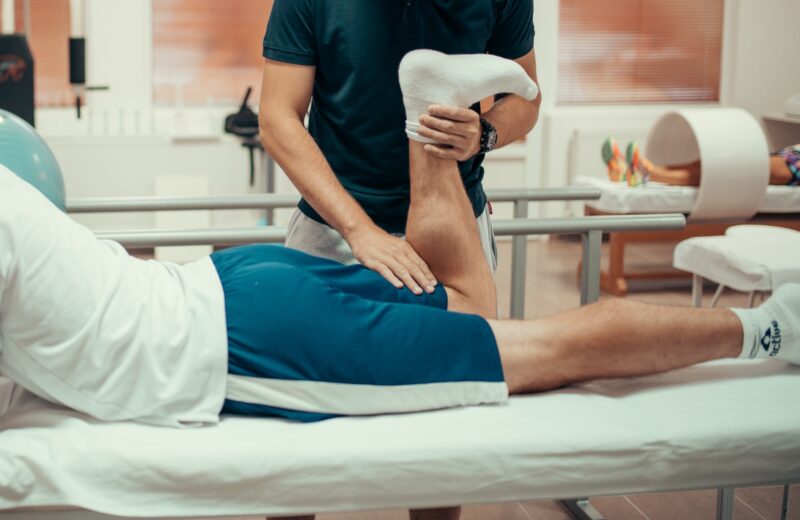
The first goal is to calm the nerve. Assessment finds the directional preferences that reduce leg symptoms, often using McKenzie-style repeated movements, along with positions of relief, gentle manual therapy and advice that replaces bed rest with staying active.
Once leg symptoms settle, the focus moves to rebuilding support: deep core, glute and hip strength so the spine shares load properly. Supervised clinical pilates on the reformer is well suited to this stage because it lets load be added gradually in supported positions. Finally, lifting, sitting and training mechanics are corrected so the disc is not asked to do the same thing that irritated it.
When Surgery Really Is the Answer
Surgery is considered for progressive muscle weakness, for severe pain that has not improved after a proper trial of conservative care, and as an emergency when there is loss of bladder or bowel control or numbness in the saddle area. Where surgery is needed, physiotherapy before and after improves the result, as it does for other spinal injuries.
If you have any of the emergency signs, do not wait for a physiotherapy appointment: get same-day medical assessment.
Book a Slip Disc Assessment at Sevens Physiotherapy
At Sevens Physiotherapy in HSR Layout, Bangalore, we assess your nerve function, classify how your pain behaves and build a step-by-step plan, and we tell you honestly if your presentation needs a surgical opinion instead. Book at hello@sevensphysiotherapy.com or call +91 99009 01958.