The term sports massage gets used loosely in Bangalore, applied to everything from a deep tissue session at a hotel spa to targeted soft tissue work inside a physiotherapy programme. The gap between those two things matters, because sports massage has genuine clinical applications and clear limits, and mixing them up means people either expect too much from a massage or write it off entirely when what they actually needed was exactly this.
Sports massage is targeted soft tissue work, not general relaxation. The best-supported use is post-exercise recovery, applied 24-72 hours after intensive activity to reduce soreness and muscle tension. Trigger point release is also well-supported. Pre-competition performance enhancement is not — the evidence there is weak. It’s an adjunct to physiotherapy, not a substitute for it when there’s a structural cause of pain.
This guide covers what sports massage actually is in a clinical physiotherapy context, what the evidence supports, how it fits into a training or rehab programme, and what to expect from a session.
What Actually Distinguishes Sports Massage From a Regular Massage
Sports massage is a category of soft tissue therapy that uses manual techniques — effleurage, petrissage, friction, trigger point pressure, muscle energy techniques — applied with specific knowledge of anatomy, muscle function, and the demands of athletic activity.
The real distinction from a relaxation massage is intent and specificity. A relaxation massage is applied broadly to reduce generalised tension and promote a parasympathetic, calming response. It works by that mechanism and does it well. Sports massage is applied to specific muscle groups with the goal of reducing tension that’s limiting movement, releasing trigger points referring pain elsewhere, preparing tissue for high-intensity activity, or assisting recovery after it.
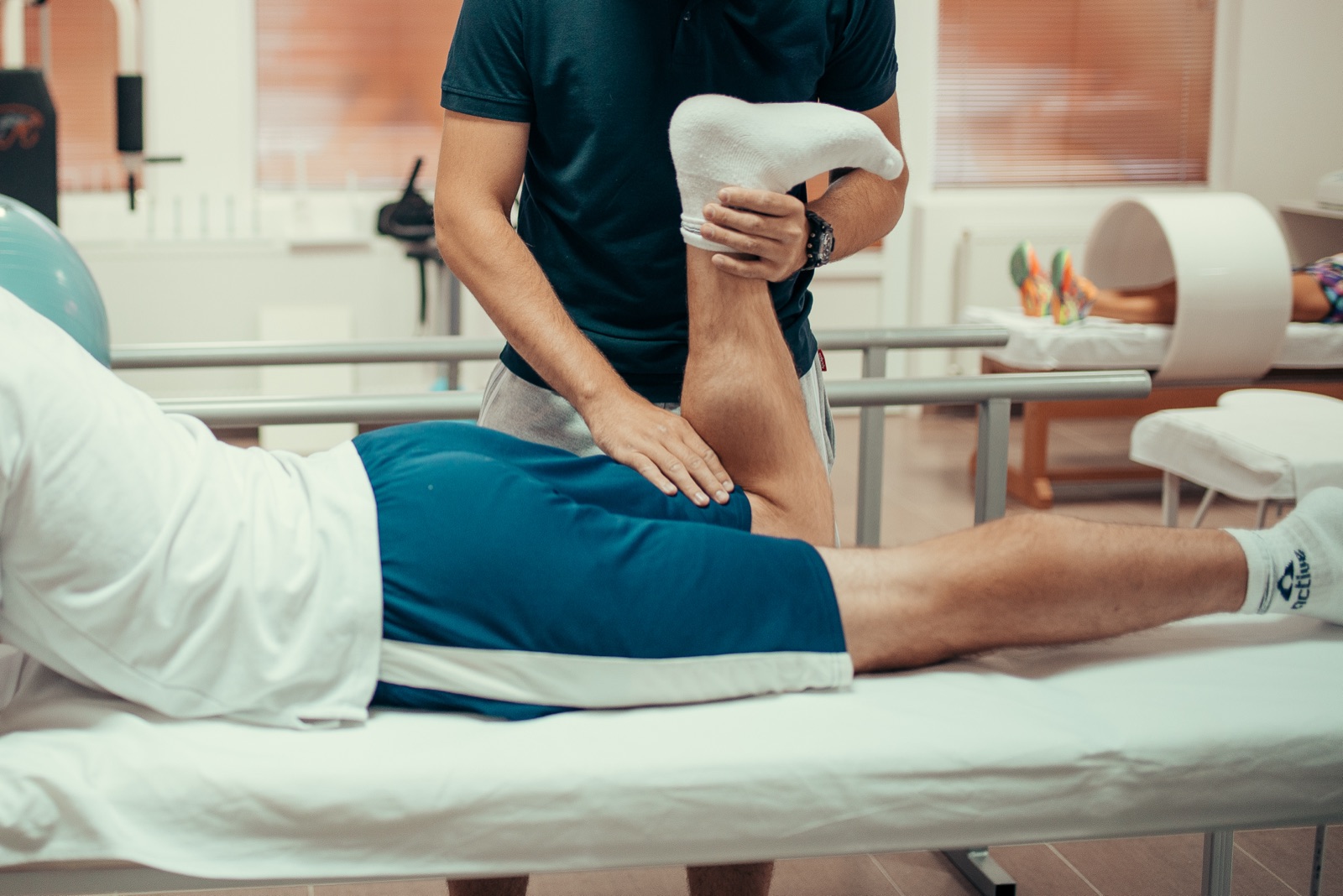
At Sevens Physiotherapy in HSR Layout, sports massage is delivered inside a physiotherapy programme, which means the person doing it understands the clinical context: what injury is present, what stage of rehab the patient is in, which muscles are affected, and what role the massage plays in the broader plan.
The claims made about sports massage range from well-supported to significantly overstated. It’s worth being honest about where the evidence actually sits before booking one for the wrong reason.
What the Evidence Actually Supports
The strongest evidence is for reducing perceived muscle soreness in the days following intense exercise — delayed-onset muscle soreness, or DOMS. Multiple studies show sports massage applied 24 to 72 hours after intensive exercise reduces the subjective experience of soreness compared to no treatment. The mechanism appears to involve reduced inflammatory markers and improved parasympathetic tone, not literal clearance of lactic acid, which is a persistent myth.
Sports massage also has good evidence for reducing muscle tension and improving range of motion in specific presentations. A chronically tight muscle limits movement at the joint it crosses, and reducing that tension through skilled manual work restores range that stretching alone won’t reach, at least in the short term.
Trigger point release — focused pressure on hyperirritable spots in muscle that refer pain elsewhere — is another well-supported application, closely related to the manual assessment used before dry needling. Trigger points in the upper trapezius, for instance, commonly refer pain to the head, jaw, and temple. Releasing them reduces that referred pain and can meaningfully help with headache management.
Where the evidence is weaker is performance enhancement. Massage applied right before competition, hoping it’ll make an athlete faster or stronger in the session that follows, hasn’t shown consistent benefit in controlled trials. It may reduce subjective tension and have a modest positive effect through psychological mechanisms, but the direct physiological performance claim doesn’t hold up well.
The Four Contexts Sports Massage Gets Used In
Pre-event massage is applied immediately before competition or training to warm the target muscles and reduce tension. Technique is typically brisk and superficial rather than deep — sustained deep pressure right before high-intensity activity can temporarily reduce the reactivity and force output of the treated muscle.
Post-event massage is applied in the hours after significant activity to assist recovery: lighter technique, focused on restoring normal muscle tone and reducing localised soreness. This is the application with the strongest evidence.
Maintenance massage, done regularly through a training block regardless of specific events, serves a monitoring function. The therapist gets familiar with an athlete’s normal tissue state and can flag accumulating tension before it becomes an injury — one of the most practically useful things regular sports massage does inside a serious training programme, and it overlaps closely with how we manage sports injuries more broadly: catching load problems early rather than treating them after they’ve become acute.
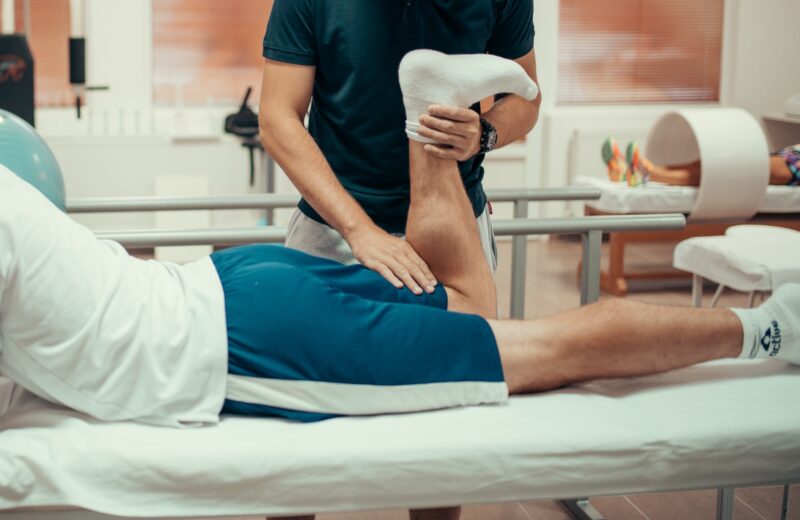
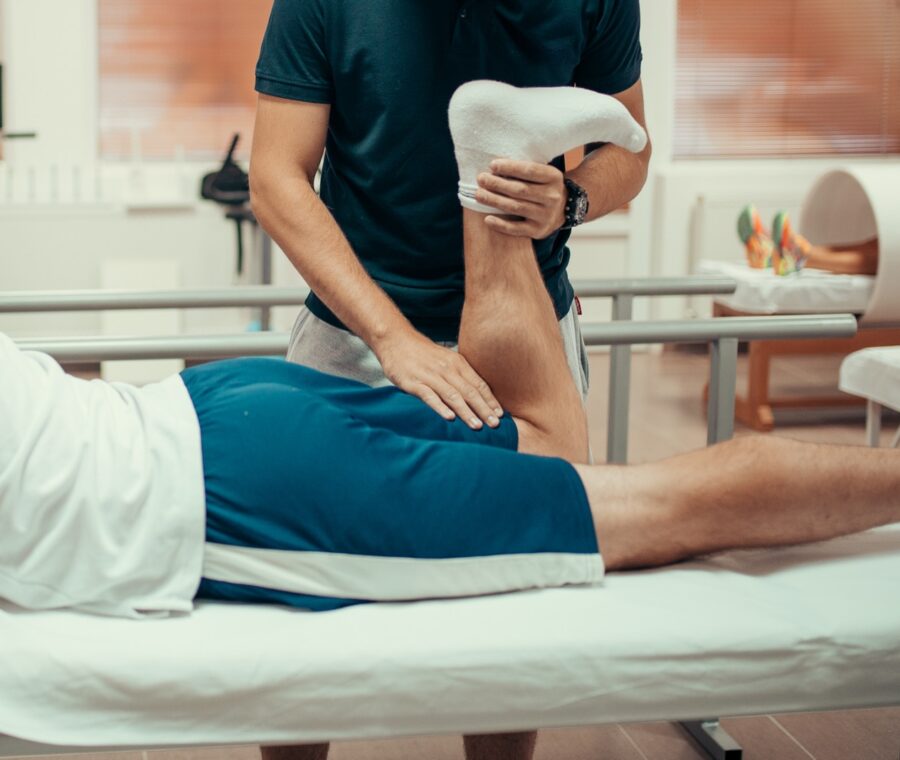
Rehabilitation massage is used inside a physiotherapy treatment programme for a specific injury. Here, it’s targeted at the affected tissue and used alongside exercise, manual therapy, and other modalities, with frequency and technique determined by the physiotherapist managing the case.
What to Expect in a Session at Sevens
A sports massage session begins with a brief assessment: presenting complaint, training history, areas of tightness or pain, and any contraindications like recent injury, skin conditions, or vascular problems.
Treatment starts with lighter strokes to warm the tissue before progressing deeper. Communication matters here — deep tissue work should feel like significant pressure with tolerable discomfort, not sharp or escalating pain. If you’re tensing against it, it’s too much, and the therapist will adjust based on your feedback.
Areas of tension or trigger points may produce referral symptoms during treatment, which is normal. A trigger point in the upper trapezius might refer a spreading ache to the head or arm under pressure — this resolves once the pressure releases. Mild soreness in the treated area for 24 to 48 hours afterward is expected following deep tissue work.
When Sports Massage Isn’t the Right Call
Sports massage is contraindicated over areas of acute injury with active inflammation. Massaging directly over an acutely inflamed tendon, ligament, or muscle tear in the first 48 to 72 hours can worsen the inflammatory response and slow healing — a common mistake when people seek massage immediately after getting hurt. It’s also contraindicated over suspected deep vein thrombosis, skin infection, open wounds, and certain dermatological conditions, all of which a physiotherapist will screen for before treating.
And it doesn’t substitute for physiotherapy when there’s a structural cause behind the pain or movement limitation. Massaging a painful shoulder may temporarily ease the muscle tension contributing to it, but it won’t address rotator cuff weakness or joint pathology causing the problem. In those cases, massage is an adjunct to treatment, not the treatment itself — the same principle that applies to back pain with a muscular component versus back pain from a disc or nerve issue.