S
Sevens Physiotherapy
Physiotherapy · Movement · Rehab
Home/Conditions/Osteoarthritis Knee
Lower Body · Treatment

Osteoarthritis Knee

Non-surgical management of knee osteoarthritis. The evidence is clear — strength training, mobility work, and weight management beat any passive treatment. We programme all three.

Typical programme
12–24 weeks (ongoing)
Session length
45 min
Recovery rate
87%
Understanding the condition

Knee osteoarthritis — why exercise beats rest, and what the evidence actually says.

If you have knee osteoarthritis you have probably been told to take it easy. The evidence says the opposite: strength training, mobility work and weight management beat any passive treatment for knee OA — and can delay or even avoid surgery. The joint is not simply wearing out; it responds to the right load.

Our non-surgical programme combines all three pillars. We build the muscle that supports and offloads the joint, restore the mobility arthritis has stiffened, and guide load and weight so the knee has less to carry. Pain modulation along the way keeps you able to do the work that actually changes things.

Osteoarthritis Knee
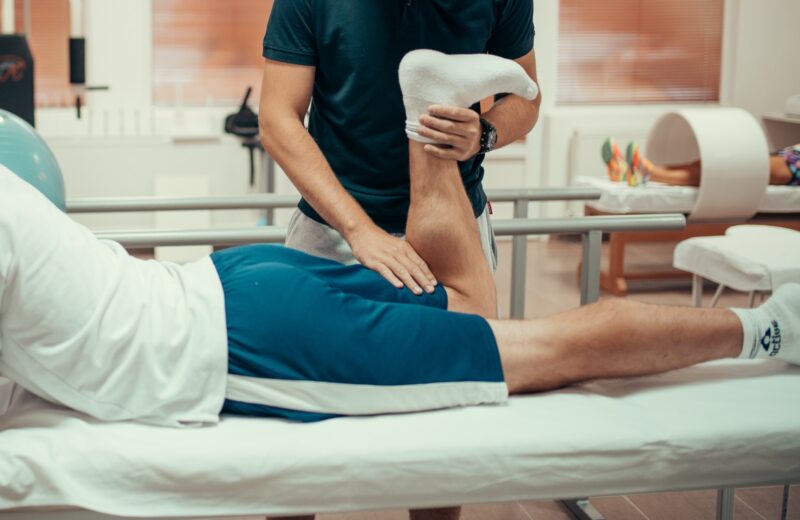
Image — strengthening for knee osteoarthritis
Why it happens

The root causes we look for.

01
Age-related cartilage degeneration
Articular cartilage thins and loses elasticity progressively with age, reducing its ability to distribute joint load. The medial (inner) compartment of the knee is most commonly affected.
02
Previous joint injury
ACL tears, meniscal injuries, and significant fractures accelerate cartilage wear — sometimes producing symptomatic OA twenty to thirty years earlier than would occur otherwise.
03
Obesity and elevated BMI
Each kilogram of body weight adds approximately 4 kg of load to the tibiofemoral joint on stairs. Excess body weight is both a significant causative factor and the most modifiable lifestyle variable in OA management.
04
Quadriceps weakness
Weak quadriceps fail to adequately absorb shock and distribute load across the joint surface, increasing point pressure on degenerated cartilage. Maintaining quad strength is protective even in advanced OA.
05
Malalignment (varus or valgus)
Bow-legged (varus) or knock-kneed (valgus) lower limb alignment concentrates load on the inner or outer compartment respectively, accelerating cartilage loss in that compartment.
Symptoms we treat

Recognise any of these?

Stiffness on first movement of the day
Pain going down stairs
Aching after long walks
Swelling in the knee joint
Grinding or grating on movement
Pain that worsens in cold weather
Our Approach

How we'll actually treat it.

WEEK 1
1
Education & screen
Understand what OA actually is, what helps and what doesn't. Full screen.
WEEK 2–6
2
Pain reduction
Manual therapy, gentle movement, and graded loading to settle symptoms.
WEEK 6–16
3
Strength loading
Progressive resistance training — the single most effective intervention for OA.
ONGOING
4
Maintenance
A home programme, nutrition support, and quarterly check-ins to maintain the gains.
Services Involved

The disciplines we'll combine.

Every programme braids two or three of our core services. Here's the typical pairing for this condition.

The results

Treatment that actually holds.

Structured exercise programmes for knee OA consistently produce 40–50% reductions in pain and meaningful improvements in function at twelve months. Patients who maintain a home exercise programme after discharge sustain those gains.

87%
Recovery & satisfaction rate
87%
Reduce pain & improve function
12–24 weeks (ongoing)
Typical programme
45 min
Per session
Common questions

Your questions, answered.

Still unsure? Our clinicians answer the questions patients ask most. You can always call the HSR Layout clinic for a straight answer first.

Ask us directly

No — this is one of the most persistent and harmful myths in knee OA management. The evidence is clear that appropriate exercise does not accelerate cartilage loss. Articular cartilage is nourished by joint fluid that is pumped in during movement; prolonged rest actually reduces cartilage health. The caveat is that the type and volume of exercise matters — we guide you on what loads are beneficial and which to avoid.
Cortisone provides effective short-term pain relief (typically four to eight weeks) and can be a useful tool to enable more comfortable rehabilitation during a painful flare. The evidence does not support repeated injections as a long-term management strategy. We use it as an adjunct when needed, not as primary treatment.
Not necessarily. X-ray findings correlate poorly with symptoms and function in knee OA — many people with severe X-ray changes have mild symptoms, and vice versa. The decision for knee replacement is based on functional limitation and quality of life, not X-ray severity alone.
150 minutes of moderate-intensity aerobic activity per week is a reasonable target for knee OA management. More practically: start with what you can do comfortably, increase progressively, and treat pain during or after exercise as feedback about load rather than a reason to stop. We structure this specifically for you, not as a generic recommendation.
Ready to start?

Let's get this handled.

Book a 60-minute assessment with one of our clinicians. You'll leave with a clear diagnosis, a written programme, and a realistic timeline.

Book assessment
What's included:
  • → Full movement assessment
  • → Diagnosis & root-cause analysis
  • → Written programme with milestones
  • → Cost & timeline upfront
  • → Same-day hands-on treatment if appropriate