S
Sevens Physiotherapy
Physiotherapy · Movement · Rehab
Home/Conditions/Sports Massage
Modality · Treatment

Sports Massage

Deep-tissue and pre-event massage for athletes and active patients. Programmed around your training cycle — not delivered as a one-off relaxation session.

Typical programme
Per cycle
Session length
60 min
Recovery rate
Understanding the condition

Sports massage at Sevens+ — programmed around your training cycle, not a one-off appointment.

Sports massage is not a one-off treat — used well, it is a tool that fits into your training cycle. Deep-tissue and pre-event work can support recovery, manage accumulating tightness, and keep hard-training bodies moving well. The key is timing it to your schedule, not your stress levels.

We programme massage around your training — deeper restorative work in heavier blocks, lighter pre-event work before competition. It pairs naturally with our physiotherapy and strength services, helping you absorb the load you are putting in and stay available to train and compete.

Sports Massage
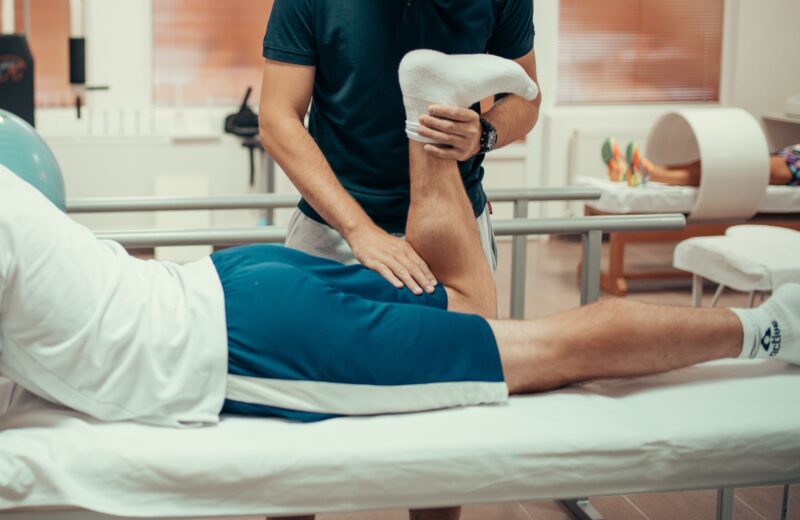
Image — deep-tissue sports massage in session
Why it happens

The root causes we look for.

01
Cumulative training load and DOMS
Repetitive muscular loading — particularly eccentric contractions in running, jumping and weight training — produces delayed onset muscle soreness that impairs subsequent training quality if not managed.
02
Tightness from chronic postural overload
Sustained muscle activation in a shortened or lengthened position (as in desk work or asymmetric sport) produces chronic tightness that degrades tissue extensibility and increases injury risk.
03
Pre-event preparation needs
The nervous system and muscular system require specific preparation for high-intensity performance. Pre-event massage supports tissue readiness without the soreness risk of deep work.
04
Recovery acceleration between sessions
Athletes training at high frequency need their tissue to recover faster than passive rest allows. Sports massage accelerates the removal of metabolic waste and restoration of tissue length between sessions.
Symptoms we treat

Recognise any of these?

Heavy legs after training
Tightness in specific muscle groups
Pre-event preparation
Post-event recovery
Niggling injuries that haven't flared
Reduced range affecting performance
Our Approach

How we'll actually treat it.

STEP 1
1
Training context
Where are you in your training cycle? Pre-comp, post-comp, mid-block?
STEP 2
2
Targeted work
Specific muscle groups based on your sport and current load.
STEP 3
3
Manual depth
Deep tissue, myofascial release, trigger point work — calibrated to tolerance.
STEP 4
4
Recovery plan
Self-care advice for the 48 hours after. Hydration, mobility, follow-up if needed.
Services Involved

The disciplines we'll combine.

Every programme braids two or three of our core services. Here's the typical pairing for this condition.

The results

Treatment that actually holds.

Sports massage is most effective as a planned component of a training programme. Athletes who integrate regular massage into their training cycle report fewer soft-tissue injuries and better recovery between sessions.

Per cycle
Timed to your training block
Per cycle
Typical programme
60 min
Per session
Common questions

Your questions, answered.

Still unsure? Our clinicians answer the questions patients ask most. You can always call the HSR Layout clinic for a straight answer first.

Ask us directly
A light, activating massage is appropriate 24–48 hours before competition. Avoid deep tissue work within 48 hours of a race — it can produce temporary soreness that impairs performance. If you want deep work, schedule it three to five days before the event.
It depends on the injury. Massage directly over an acute injury (within 48–72 hours of a muscle strain or sprain) is contraindicated — it can increase bleeding and inflammation. Around an injury — the proximal and distal tissues that are compensating — is often appropriate and helpful.
Yes. Sports massage is targeted, uses higher pressure in specific areas, and is timed and structured around your training goals rather than general relaxation. The therapist uses anatomical knowledge of your sport's demands to prioritise which structures need the most attention.
For athletes in heavy training, every one to two weeks is a typical frequency for maintenance. During competition blocks, a light pre-event and post-event massage around major races is the priority. We give a specific recommendation based on your training volume and the demands of your sport.
Ready to start?

Let's get this handled.

Book a 60-minute assessment with one of our clinicians. You'll leave with a clear diagnosis, a written programme, and a realistic timeline.

Book assessment
What's included:
  • → Full movement assessment
  • → Diagnosis & root-cause analysis
  • → Written programme with milestones
  • → Cost & timeline upfront
  • → Same-day hands-on treatment if appropriate